

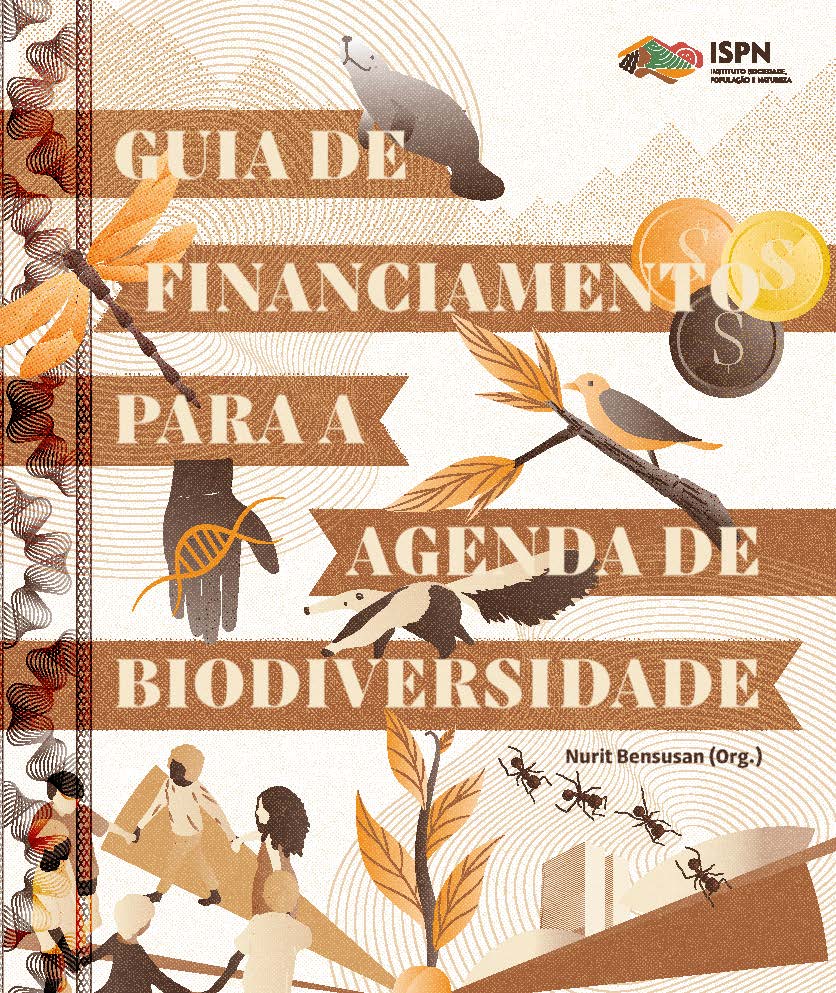
Transforming national commitments to biodiversity conservation into concrete actions also depends on expanding and democratizing access to financial resources. It is in this context that the Institute for Society, Population and Nature (ISPN) is launching the Financing Guide for the Biodiversity Agenda , a publication that maps sources, mechanisms, and funding opportunities for initiatives focused on conservation, sustainable use of biodiversity, and the strengthening of traditional peoples and communities.
The guide was organized by researcher Nurit Bensusan, based on a study conducted by the Institute for Socioeconomic Studies (Inesc) during the preparatory phase of the project "Capabilities and Structures for the Implementation of the National Strategy and Action Plan for Biodiversity (ESPANB)," CAP4Bio, a partnership between ISPN and CIFOR/ICRAF, supported by the International Climate Initiative (IKI). The publication stems from a central challenge for EPANB 2025-2030: ensuring that the resources needed to meet national targets reach the different territories and the organizations and communities that work directly in the conservation and sustainable use of biodiversity.
For Nurit, the problem is rarely the lack of resources, but the path to obtaining them. “The existence of resources doesn't always translate into access and availability for those who need them. Documentation, language, accountability, and much more make the theoretical existence of resources a practical impossibility,” she assesses. “Sometimes adjustments are needed in how these resources are presented, but what we try to do with the guide is a kind of mediation, a translation, that makes the incomprehensible feasible,” the researcher concludes.
Main Targets
EPANB establishes national goals until 2030, ranging from reducing threats to biodiversity to its sustainable use, and including increasing funding for the strategy itself, among others.
The guide points out that the implementation of the biodiversity agenda takes place in the territories, and many of the activities developed by peoples and communities depend on financial resources. Therefore, understanding where the resources are, how they work, and how they can be accessed is a fundamental part of implementing the National Biodiversity Policy (EPANB) and state and local biodiversity strategies.
“The challenge is not only to increase the volume of available resources, but to ensure that they reach those who are in the territories and work directly in biodiversity conservation. Indigenous peoples, traditional peoples and communities, quilombola communities, and family farmers are fundamental to this agenda and need access to the resources necessary to strengthen their initiatives and ways of life,” points out Silvana Bastos, coordinator of the Sociobiodiversity Program at the Institute for Society, Population and Nature (ISPN).
One of the central points of the publication is the recognition of the fundamental role of indigenous peoples, traditional peoples and communities, quilombola communities, and family farmers in the conservation of biodiversity.
Translation
The guide presents concepts and explains the differences between funding sources, instruments, and mechanisms, and shows how to access them, indicating, as appropriate, calls for proposals, public notices, letters of invitation, spontaneous requests, and other avenues. This is the translation work that the guide aims to perform.
According to Nurit, one of the biggest obstacles is deciphering the industry jargon. "The required documentation is a hurdle for some entities, but the most difficult thing is deciphering the jargon, understanding the terms to try and find your way through the tangled world of financing," he says.
O Funding Guide for the Biodiversity Agenda It is available for download on the ISPN website for consultation and can be used by public managers, civil society organizations, leaders representing indigenous peoples, traditional communities and family farmers, advisors, researchers and all those interested in understanding and accessing resources for the biodiversity agenda in Brazil.