

Traditional communities and family farmers in Maranhão and Tocantins show that education, communication and the practice of crafts engage young people and make them proud of their rural roots, aware that they are the ones who sustain the cities, in addition to their own families.
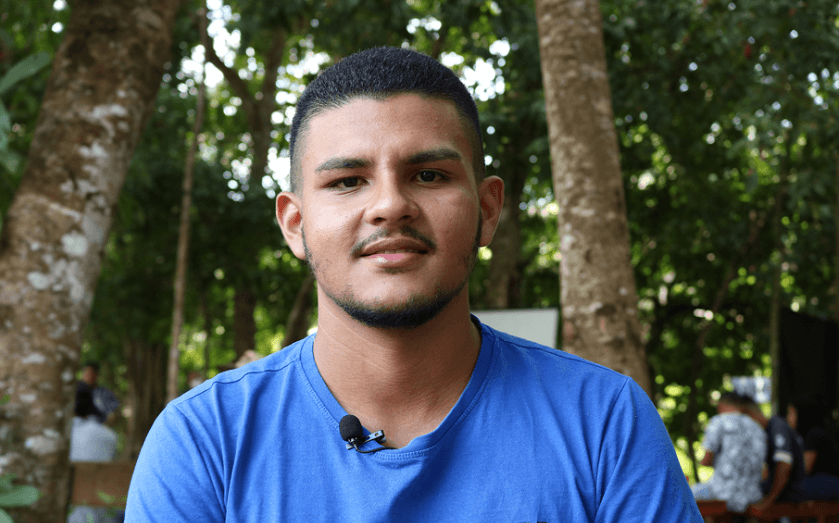
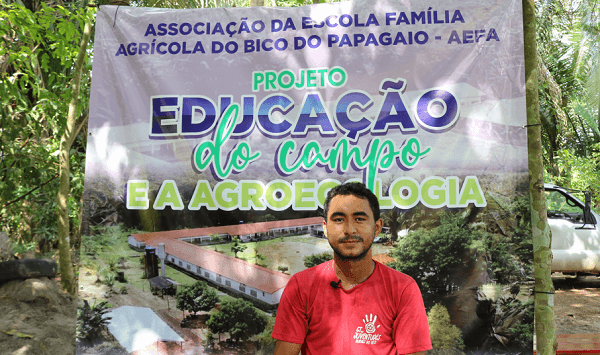
Development and modernity come from the countryside. This is the conviction of Erivelton Oliveira Sousa, 18, a student in his final year of high school at the Escola Família Agrícola do Bico do Papagaio Padre Josimo. In the far north of Tocantins, students learn not only mathematics, Portuguese, biology, arts and conventional subjects, but also have classes on social movements, unions, agroecological production and animal husbandry. Based on the pedagogy of alternation, children and young people spend one week at school and one week doing activities at home, applying their knowledge in their own communities and sharing what they learn about the land with their farming families.
A remnant of the quilombola community of Ciriaco, located on the banks of the Tocantins River, Erivelton arrived at EFA while still in elementary school. He recalls that he found a space where he could identify with what was taught, finding a solid connection between theory and practice. Today he plans to pursue higher education in Agricultural Sciences, but he doesn't want to go far: he wants to be close enough to his community to continue improving local work with the land.
“If everyone leaves the countryside, who will feed the city? Who will get their hands dirty with the soil? Development also comes from the countryside, which is the basis for sustaining the city.” Erivelton is aware of the importance of rural succession, something he learned at school and sees in his daily life. He says that his community used to be large, but today there is only one family living there, for whom he serves as a source of information on best agricultural practices. There, they plant sugarcane, raise chickens, maintain a vegetable garden and, more recently, Erivelton started to set up a local apiary.
Agroecology from school to family
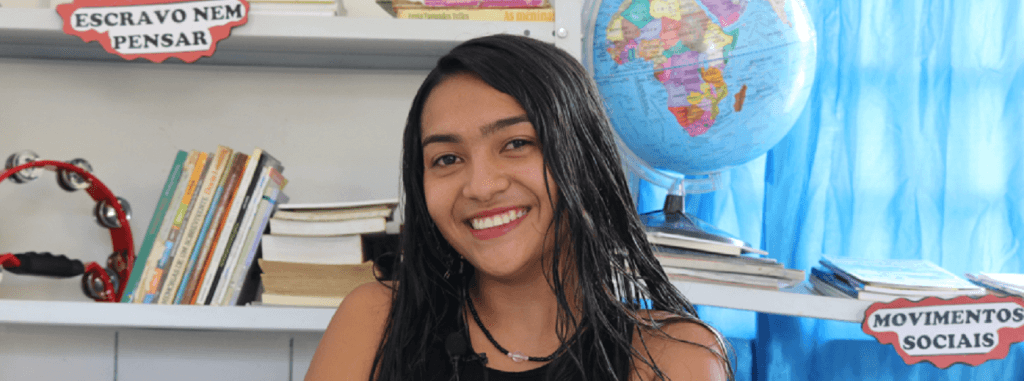
Silmara Silva, 17, has been at EFA for four years. She dreams of becoming a photographer and has already begun to venture into the artistic field. In EFA’s art class, students are encouraged to create paintings, collages and drawings using natural elements collected from the forest. But what touched Silmara the most was learning about agroecology. “It’s a way for us to improve things; here at school they teach us not to use pesticides, which improves our lives.”
According to the 2020 "Who Cares, Who Does?" survey by Kantar, children are the biggest influencers in people's choices and changes in consumption towards an environmental focus. Famous celebrities appear in eighth place on the list of influencers, reinforcing the importance of youth in shaping the entire family. Recently, a survey conducted by APA-TO among agroecological youth in the Bico do Papagaio region showed that, out of 245 students from 12 municipalities in the region, 72% want to remain in rural areas. This number is a result of educational and communication engagement initiatives aimed at these young people.
Communication to promote and enhance
Matheus Indiano, 23, a former EFA student and current technician at the institution teaching agroecology, is one of the young people who are part of the GT das Juventudes Rurais do Bico, a group that brings together quilombolas, coconut breakers and settlers who are members of social movements that organize rural youth. Created in 2018, the GT discusses rural issues and, during the pandemic, through thematic workshops for social networks, it began to encourage the production of content created by the communities themselves to promote the rights, identities and cultures of the communities.
On its Instagram profile, the GT publishes videos and photos produced by the young people, such as the tutorial on how to make turbans, produced by Laith Cardoso, or the tutorial recorded by Antônio Ly, which teaches how to make a secret box with babassu palm straw. For Matheus, who suffered prejudice as a child because he was from a rural area, education was essential for him to be proud of his origins.
“Our ancestors were raised in the countryside, which means that we, as young people, need to continue this struggle. I realize that I am defending a workers’ struggle, and it is important to remember our origins,” says the university student who is currently studying for a degree in Rural Education at the Federal University of Southern and Southeastern Pará (UNIFESSPA), on the Marabá campus. The work that the GT das Juventudes Rurais do Bico does, in addition to engaging, expands the reach of narratives led by young people who are proud of the countryside and have valuable knowledge in agroecology, which serves to benefit global climate balance.
Craftsmanship to add value
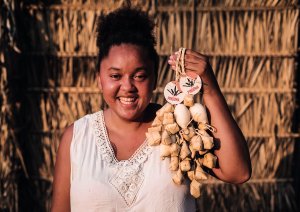
On the other side of the Tocantins River, in the state of Maranhão, in the Tocantina region, the babaçu coconut breakers from Estrada do Arroz, near the Ciriaco Extractive Reserve, carried out a project that, in addition to benefiting more than 150 families, involves young people in the production and marketing of soaps and ornaments. After virtual training and business consulting, Pindowa was born, a collective brand of handicrafts from the breakers of five villages that share the territory (São Félix, Olhos D'água dos Martins, Ciriaco, Coquelândia and Petrolina). The name is a reference to the babaçu still in its juvenile stage and is the result of the Babaçu Fonte de Vida project, supported by the Fund for the Promotion of Eco-Social Productive Landscapes (PPP-ECOS) and Suzano.
Representatives of community organizations of coconut breakers have been increasingly participating in entrepreneurship and craft fairs, in addition to increasing orders nationally and internationally. The Swiss Consulate in Brazil is a partner and recently invited Pindowa to participate in an event in the European country. In the last quarter, the brand produced almost two thousand soaps made from babassu coconut oil. This Christmas, the young women plan to create a special kit to be sold via Instagram and WhatsApp.
The experiences of the youth of Bico do Papagaio and the border region of Maranhão, with all their awareness and pride in being from the countryside, concerned about future generations and the continuity of rural succession for the benefit of cities and also the global climate, give rise to the verse by the poet Manoel de Barros: “My backyard is bigger than the world”. Perhaps the backyards of these young people are not bigger, but they are certainly responsible for saving the planet from the announced tragedies of pesticides and climate change. The future of the world lies in the agroecological backyards of these young people.
The Projects that promote EFA Bico Padre Josimo (Rural education and agroecology: paths for peasant youth in Bico), APA-TO (Socio-Productive Organization for the Promotion of Short Marketing Circuits of the Bico Agroecological Network) and the babassu coconut breakers (Organization of the Agroecological Production Network of the municipalities of Araguatins and Buriti) receive support from the PPP-ECOS Fund, for the promotion of Ecosocial Productive Landscapes, with resources from the Amazon Fund and managed by the Institute of Society, Population and Nature (ISPN).
About the PPP-ECOS Fund
The promotion of Eco-Social Productive Landscapes (PPP-ECOS) is the main strategy adopted by ISPN in the search for development with social equity and environmental balance. To make this strategy viable, the Institute manages an independent Fund that raises and allocates resources to projects of community organizations that work for environmental conservation through the sustainable use of natural resources, generating economic and social benefits. Today, the PPP-ECOS Fund's portfolio of financiers includes the Global Environment Facility (GEF), the United States Agency for International Development (USAID), the Amazon Fund/BNDES, the Laudes Foundation, the European Union and the German Ministry for the Environment, Nature Conservation and Nuclear Safety (BMU).