

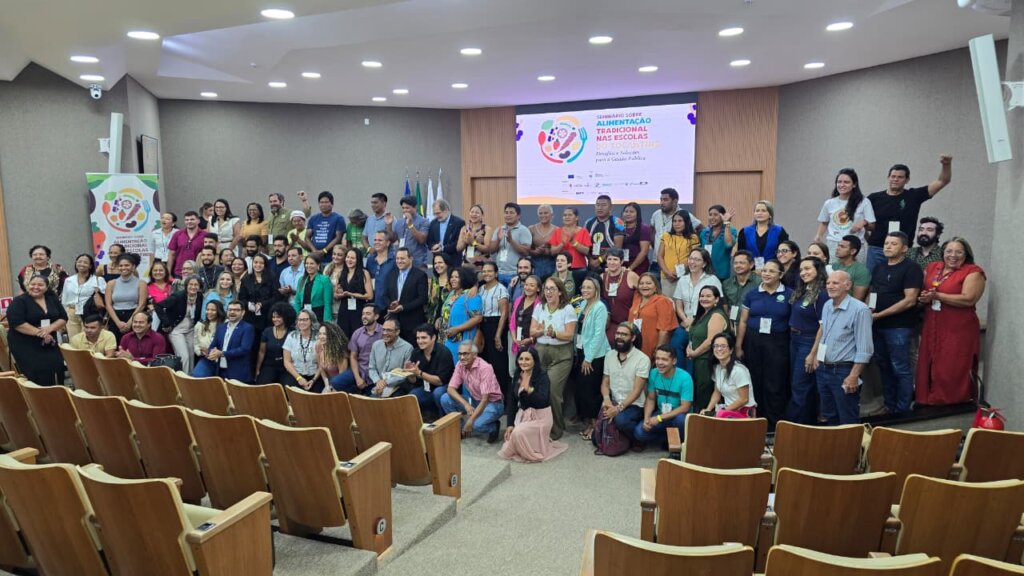
On October 21, the "Seminar on Traditional Food in Tocantins Schools" was held at the auditorium of the Tocantins State Public Prosecutor's Office (MPE-TO) in Palmas. The event, organized by the Institute for Society, Population and Nature (ISPN), the Voices of Tocantins Coalition, Catrapovos, and the Federal Public Prosecutor's Office (MPF), with co-financing from the European Union, discussed policies to encourage the purchase of food from family farming and sociobiodiversity for school meals.
Currently, the National School Feeding Program (PNAE) mandates that at least 30% of its resources be used to purchase locally produced and family-farmed products. However, producers in traditional territories face barriers to accessing these resources. Therefore, the seminar was an invitation to expand this strategy, bringing traditional meals made with sociobiodiversity products to municipal schools.
The event brought together approximately 160 people, including representatives from 13 city governments (including mayors and secretaries of education and agriculture), public ministries, state departments, federal government agencies, non-governmental organizations, traditional peoples and communities, and other institutions involved in the topic. During the seminar, successful practices for integrating traditional and local foods into schools were presented and discussed, ensuring healthy and culturally appropriate nutrition.
Catrapovos Tocantins is the Permanent Dialogue Table to promote the adoption of traditional foods in schools, coordinated by the Federal Public Prosecutor's Office (MPF). At the opening, the MPF's chief prosecutor in Tocantins, Álvaro Lotufo Manzano, highlighted the importance of policies such as the PNAE (National Food and Agriculture Organization) and the Food Acquisition Program (PAA) in promoting the identity and local economy of local peoples and communities.
"Public policy reaches each community differently, but we, in this Catrapovos group, through the PNAE and PAA, ensure that traditional food reaches our people," said Manzano.
The Federal Prosecutor also highlighted the growing incidence of diseases resulting from industrialized food among indigenous people and how public policies that encourage the acquisition of family farm products can improve the health of the community and the local economy.
Watch the presentation of the Traditional Food in Schools campaign in the Xerente Indigenous Land here:
The direct impact on communities
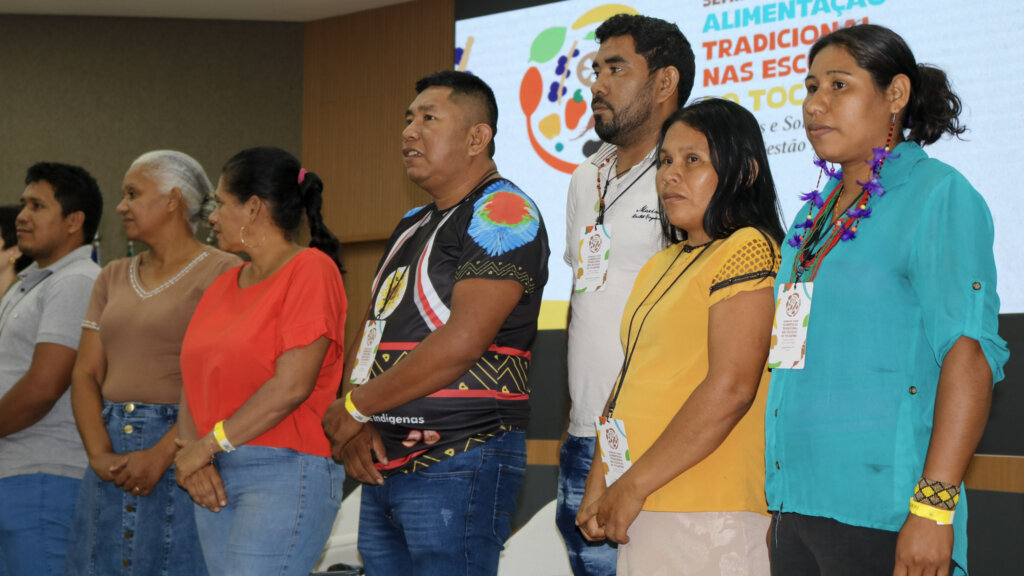
Among the producers and communities who participated in the seminar, the effects of access to these policies are already visible. Alan Apinagé, a representative of the Pyka Mex Apinajé Association, commented on the transformation in his territory.
"Our people are demonstrating their capacity, through Catrapovos, to provide food for schools and benefit the community. Today, our children and grandchildren consume food grown on farms and without pesticides," said Alan Apinagé.
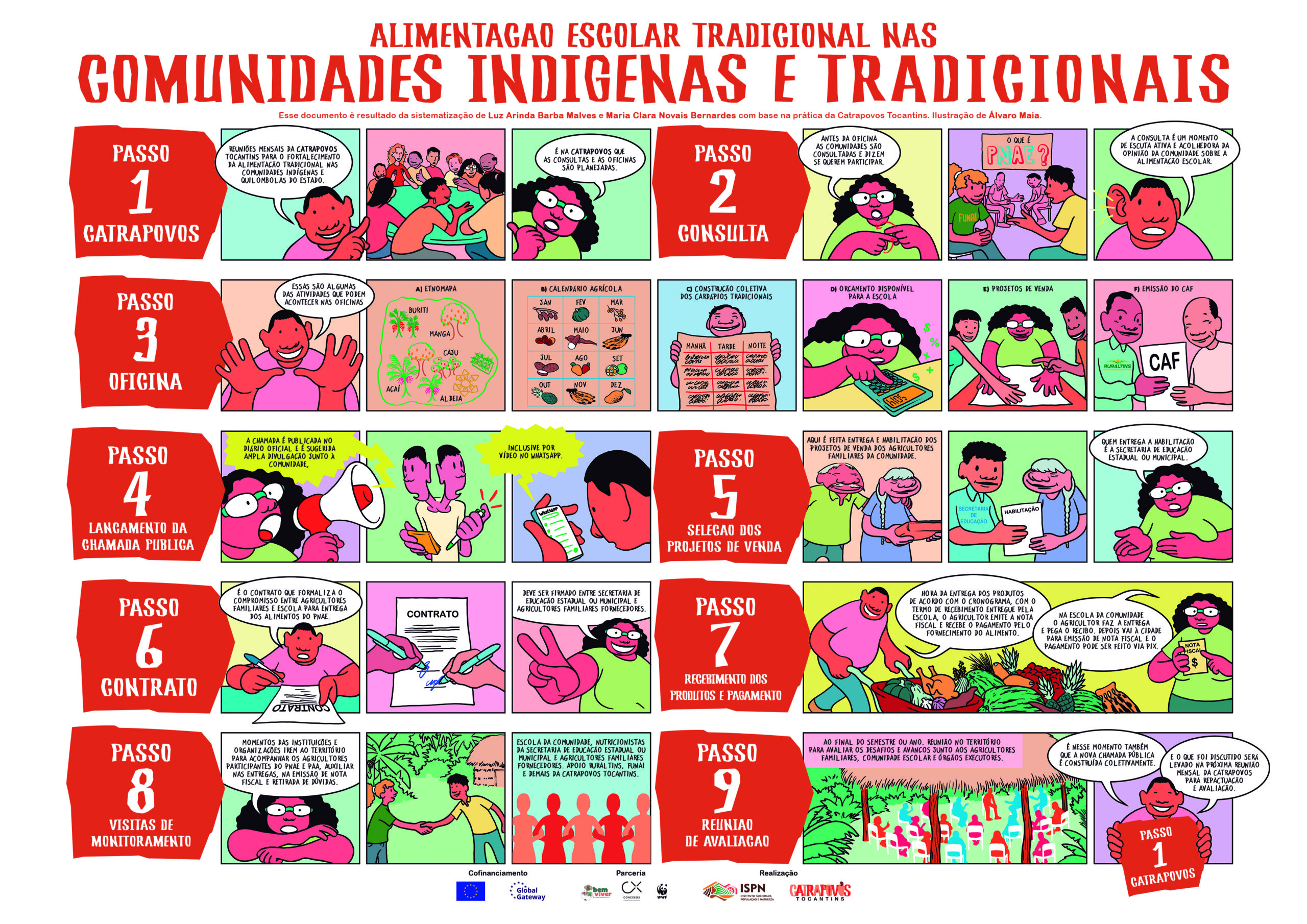
ISPN and Catrapovos used their practical experience in Tocantins to create an illustrated and educational guide. Using this guide, family farmers can understand the step-by-step process for accessing the PNAE (the material is available at this link).
Silvana Bastos, coordinator of the ISPN Sociobiodiversity Program, highlighted the strategic importance of these actions for local development, asking:
"The state is a major buyer of food. So why not use these savings to strengthen local producers?"
The event also showcased the experience of the former mayor of Bacuri, Maranhão, who managed to improve education rates in the municipality by strengthening school meals, including increasing funding through the PAA (National Assistance Program for Adolescents). Videos about school meals in the Xerente Indigenous Territory were also shown, and the "Friend of School Meals" City Hall Award was launched, which will recognize initiatives that promote good practices guided by Catrapovos for the implementation of the PAA and PNAE (National Assistance Program for Adolescents).
Read more
Watch the full event broadcast below: