

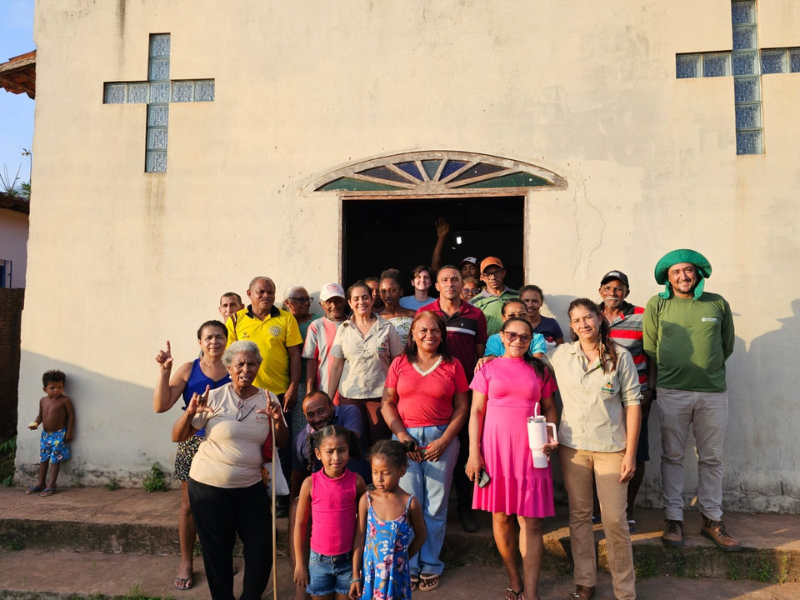
The defense of their territory, the preservation of ancestral memory, and the right to decide their own future are at the heart of the mobilization of Quilombo Capoeira, located in the rural area of Viana, in the Baixada Maranhense region (MA). The community held a workshop to develop the Protocol for Free, Prior and Informed Consultation, an instrument that establishes the rules and procedures that must be respected by public agents, companies, and other organizations before making decisions or promoting interventions that may affect the territory and the Quilombola way of life.
The activity was accompanied by technicians from the Restaura Maranhão Project, implemented by the Institute for Society, Population and Nature (ISPN), and brought together residents and leaders around a common goal: to strengthen community organization and ensure that the population is heard and respected in decisions involving their territorial, social and cultural rights.
During the workshop, participants discussed the meaning of the principles guiding the protocol: free, because the community must decide without pressure or imposition; prior, because consultation needs to happen before any decision or action that could affect the territory and ways of life; informed, because residents must receive clear, complete, and accessible information to understand the proposal and make their decisions; and in good faith, because the dialogue must be conducted with respect, transparency, and a genuine willingness to listen to and consider the community's decisions.
The document's creation also includes collective participation in validating its content, a crucial step for residents to recognize and adopt the rules. The expectation recorded during the workshop is that this validation will occur sometime in 2026.
The protocols are like showcases for these communities, as they are the gateway for any undertaking, whether public or private, to take into consideration how, when, and where these communities want to be consulted, and whether they want intervention in their territory.
“ During the first workshop, the community led all the methodological steps and demonstrated confidence regarding the community's history and the importance of preserving the memory of the territory – which is a living and lived space. They considered the systematization of the community's decision-making processes through a Consultation Protocol to be essential so that the instrument becomes a defense mechanism for the reproduction of their ways of life and the guarantee of rights and how the community wants to be respected,” emphasizes Dani Straesser, advocacy representative for the Restaura Project.
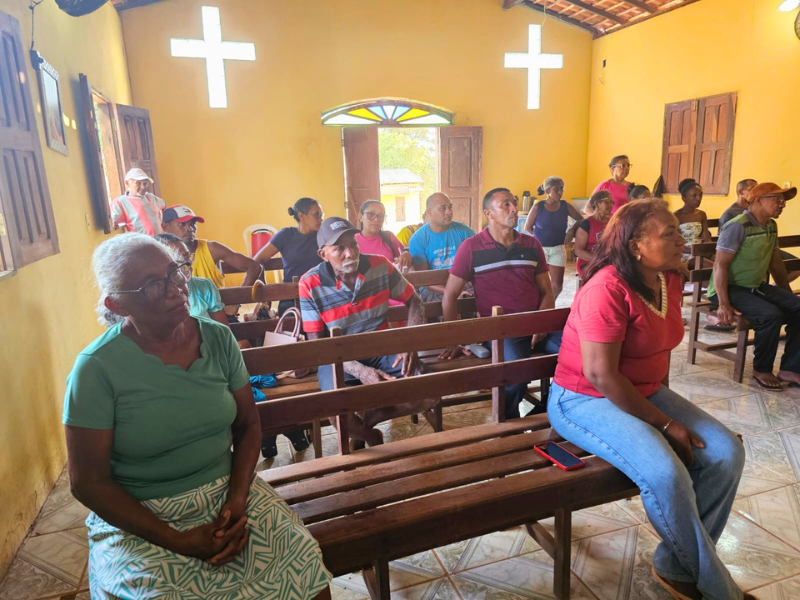
An instrument for defending territorial rights.
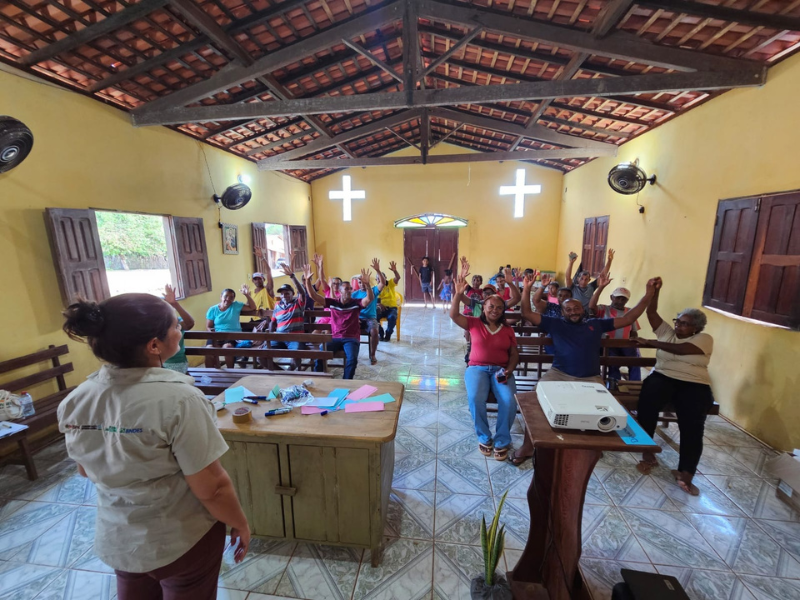
For Silvaneide dos Santos, president of the Quilombo Capoeira Residents' Association, knowing the right to consultation is an essential part of the struggle to protect the community and ensure that future generations can remain in the territory.
“It’s a project that will bring agroforestry backyards and convey the message of preserving and loving our community and defending what is ours. We can never relinquish our rights to others. For that, we need to have knowledge. Today I am learning the meaning of Prior Consultation and its importance for communities. This will stay with our children and future generations,” she says.
The Free, Prior and Informed Consultation Protocol is a document drawn up by the community itself, according to its forms of organization, representation and decision-making. Its purpose is to define how the quilombo wishes to be consulted before administrative measures, projects, ventures or other initiatives that may impact its territory and its way of life.
This instrument relates to the right to consultation provided for in Convention No. 169 of the International Labour Organization (ILO), which establishes guarantees for indigenous and tribal peoples, including quilombola communities, in decisions that directly affect them.
More than a formal document, the protocol represents a political tool for asserting community autonomy. It allows residents to establish their own conditions for participation, the time required for collective deliberation, and the procedures that must be observed by those who intend to engage in dialogue with the community.
During the activity, participants emphasized that the strength of the protocol depends on everyone's involvement.
“What we are putting in this protocol is like a doctrine for how we are going to take care of our territory. Therefore, it is important that everyone participates and is present at the validation of the document so that it has force,” Silvaneide emphasized.
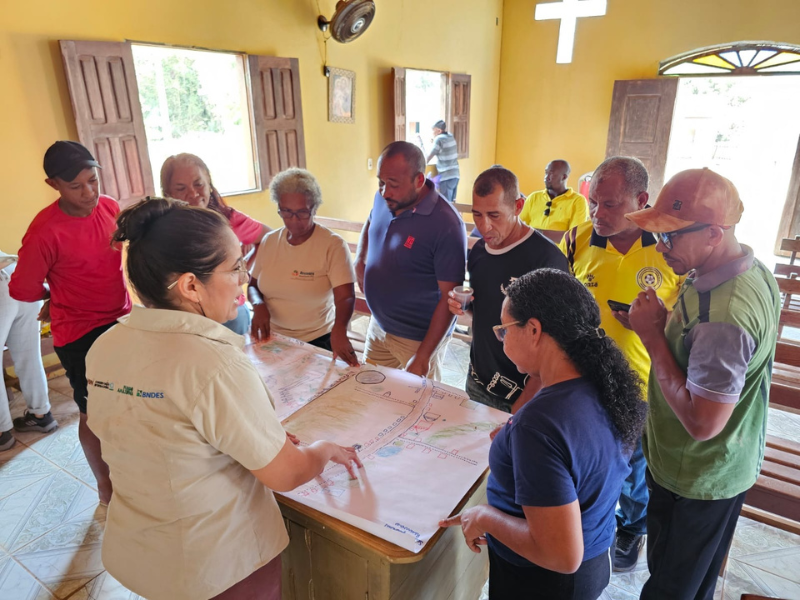
Community history
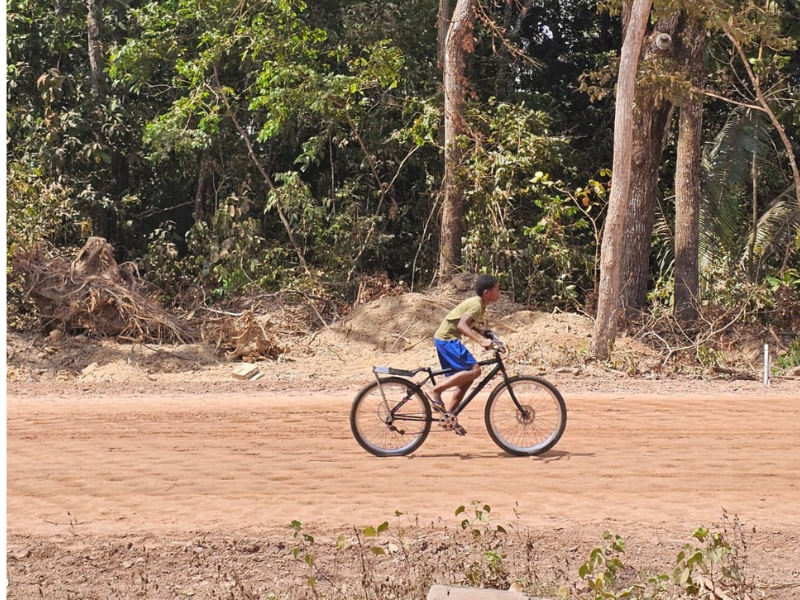
The Quilombo Capoeira possesses a document constructed based on information from the oldest residents and records of an oral tradition passed down through generations. The community is believed to have originated with the arrival of a family with the surname Capoeira to a nearby area known as Caximbeiro. The ancestors of the current residents belonged to the Rocha family. The elders record that the first to populate the area were a woman, the daughter of a white farmer, and an enslaved person. The two, as a couple, fled São Vicente de Ferrer to start a family in the locality. With the opening of a road, the families who inhabited Caximbeiro moved to what is now the village of Capoeira, also known as Capoeira dos Baías.
Among the historical landmarks of the quilombo is the record of the old Retiro sugar mill, which has been deactivated for about 50 years. The mill concentrated a good part of the community's workforce. Today, the area of the mill is occupied by farms and smallholdings.
The lands of Quilombo Capoeira are considered vacant, meaning they are rural or urban properties belonging to the public sector (federal or state), but which have no specific public purpose and have never been legally transferred to private ownership. Documents about the history of the Quilombo indicate that the local association requested the demarcation and possession through adverse possession from the Maranhão Land Institute (ITERMA). There are records in an old deed indicating that the land belonged to the indigenous people who lived in the region.
Today the territory is surrounded by large cattle ranches that are believed to have emerged after the settlement of the area. According to residents, the rules for using the surrounding natural resources are determined by the local ranchers. The harvesting of babassu coconuts, for example, can only be done on many ranches with the owner's permission.
Memory and nature threatened.
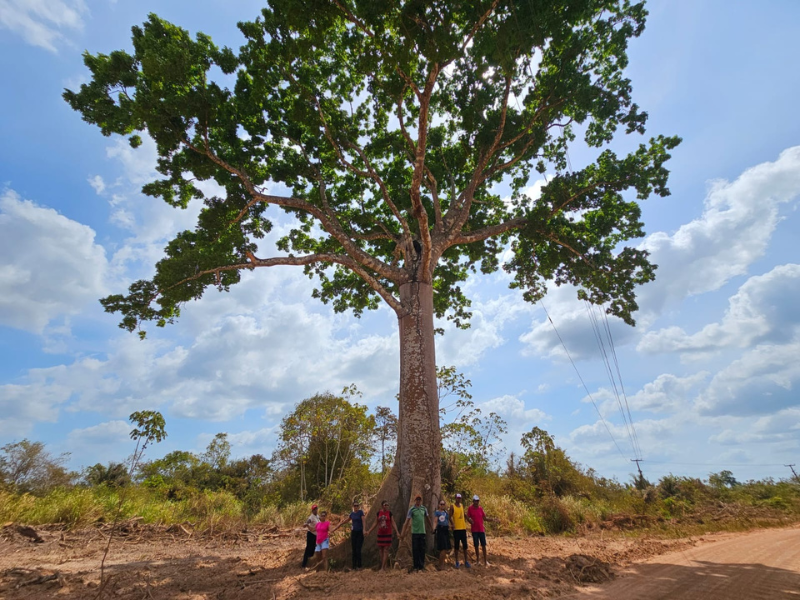
In Quilombo Capoeira, territorial defense is directly linked to the preservation of natural resources, traditional practices, and memories passed down through generations. Palm groves, lagoons, reservoirs, centuries-old trees, and community gathering spaces are part of the history and daily life of the residents.
The lagoon, for example, is important both for traditional activities, such as soaking cassava, and for community gatherings during Holy Week, when residents come together around Capoeira's main water source. These spaces represent knowledge, cultural practices, and bonds built over time.
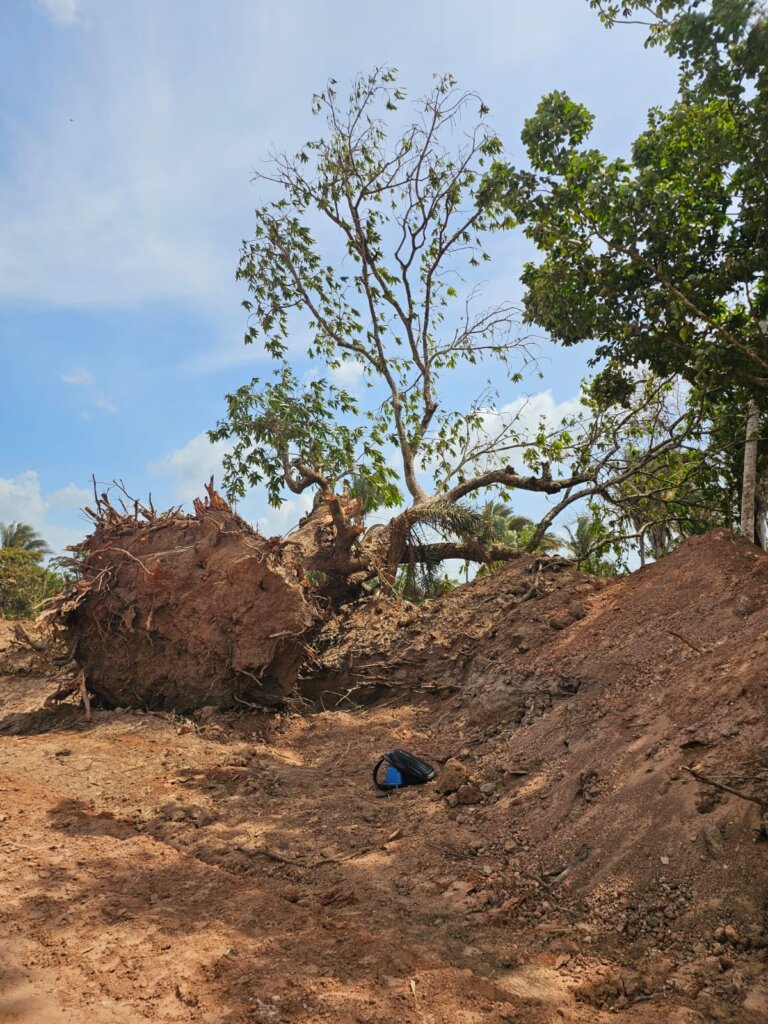
However, residents report changes in the landscape and threats to this heritage. According to community accounts, the construction of the MA-217 highway cut through the territory and has brought concerns related to high-speed vehicle traffic, the filling in of lagoons and ponds, and the felling of juçara palm groves. The continued presence of a kapok tree (Ceiba pentandra) , a tree of great symbolic importance to the residents, also worries the population in light of the interventions in the region.
The memory of these transformations appears in the account of Francisco Xavier, 70, who recalls the landscape of his childhood and the relationship of families with nature.
“I remember when we were kids, we used to play under the kapok tree. I used to walk all around here. It was full of vegetation. We need to preserve it standing. Removing it from here won't be good for our community,” she says.
The statement expresses a concern that goes beyond the conservation of a single tree: it is about protecting the places that hold collective history and continue to be points of reference for Quilombola identity.
Being a quilombola also means taking care of the territory.
The protocol's development also engages with the history of resistance of the families of Quilombo Capoeira. Throughout its history, the community has faced conflicts related to land disputes, land grabbing, and pressure from farmers on the territory. The residents' association maintains mobilization around land regularization, seeking recognition and guarantee of possession of the area.
For Zulmira de Jesus, 59, a family farmer, babaçu nut breaker, and union leader, the creation of the document represents yet another achievement in a historic struggle for the identity and rights of the community. She recounts having faced death threats because of her work defending the quilombola territory.
“This protocol is already a result of our struggles, allowing us to reaffirm all the prerequisites of being quilombola. Being quilombola isn't just about having a territory; it's a feeling of belonging. We must also fulfill our duty to care for and preserve our natural and cultural assets. To unite our diversities and preserve them,” she states.
Zulmira also emphasizes that defending rights cannot be separated from respecting the identity and needs of the population.
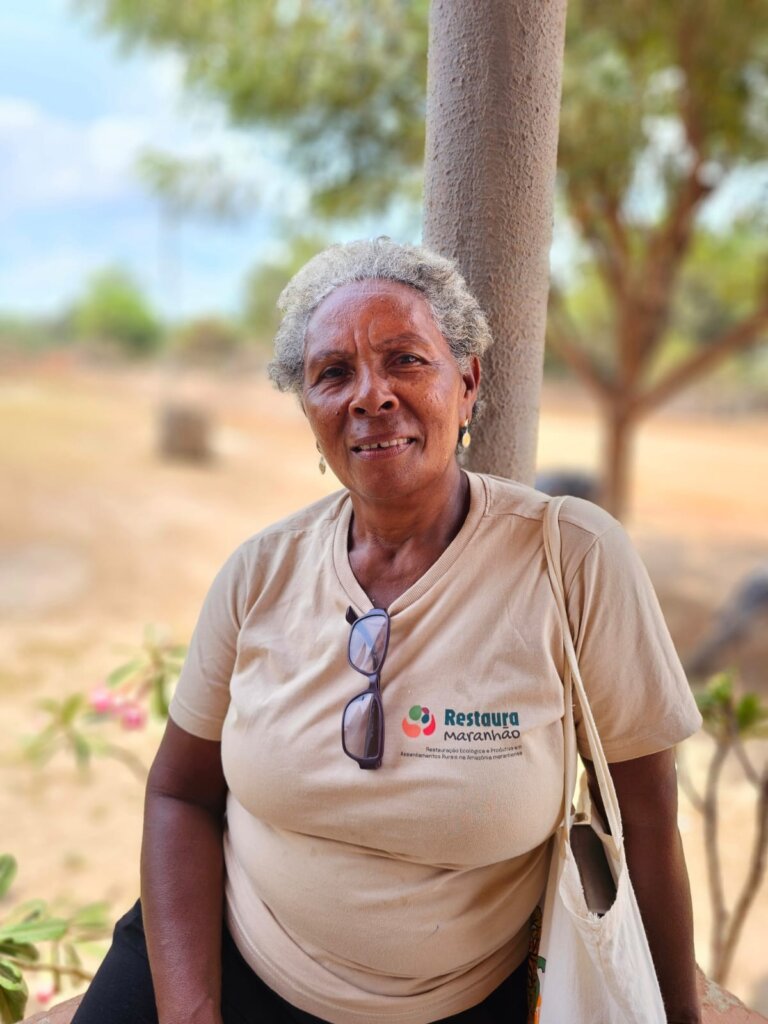
“Being free is not about being silent; it’s not about setting aside my identity just because I need a school, a road of any kind. Being free is about seeing our community preserving its identity,” she concludes.
The preservation of this memory is also present in the account of Teresinha de Aquino Santos, 72, who was born in the quilombo and raised her children in the community. In recalling the abundance of trees, fish, and food found in the forest, she highlights the changes experienced over the decades.
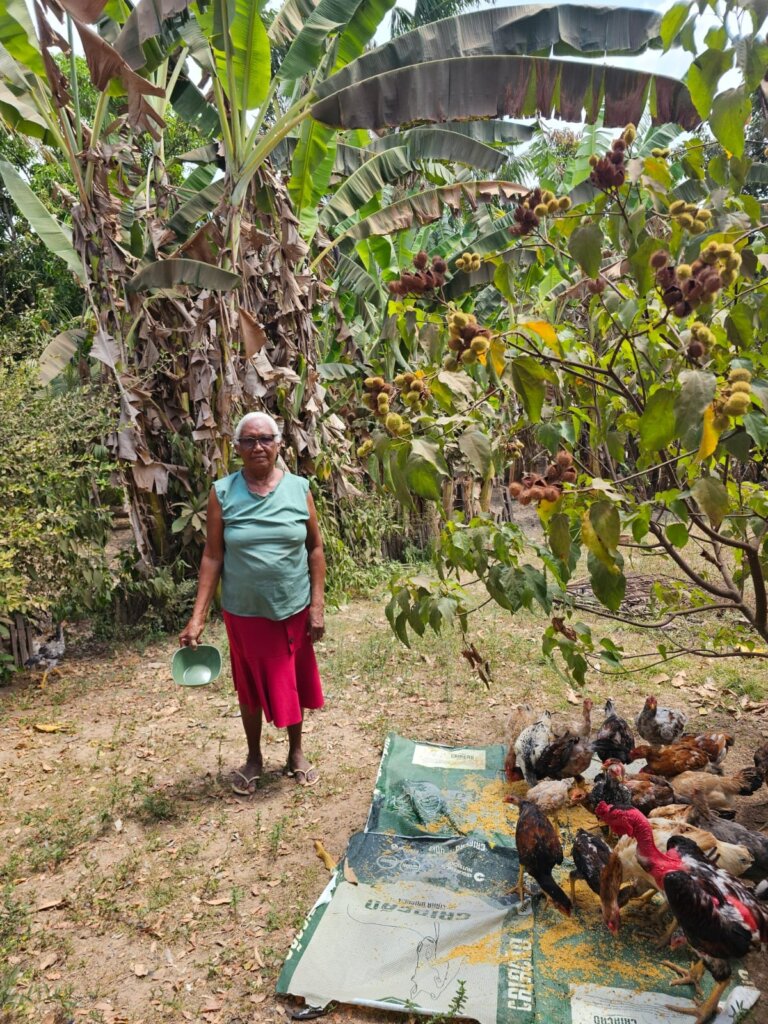
“Back then, everything was slower, there were fewer houses, and the women were cracking coconuts. I raised my children here. We all went into the woods and came back at the end of the day. I miss how nature used to be. It was full of fish, we used to fish with hooks. There were many trees, food in the forest. I will cherish this memory for the rest of my life,” she recounts.
These memories reinforce the importance of protecting not only the physical area of the territory, but also the conditions that allow for the continuity of traditional knowledge, productive practices, and ways of life of the community.
Ecological restoration and community strengthening
The workshop is part of the operational context of the Restaura Maranhão Project. The Restaura Maranhão Project, implemented by the Institute for Society, Population and Nature (ISPN), is part of a portfolio of ecological restoration initiatives in priority areas of the Amazon, supported by resources from the Amazon Fund. These initiatives are integrated into Restaura Amazônia, a program of the National Bank for Economic and Social Development (BNDES) and the federal government, with Conservation International (CI-Brazil) as a managing partner in Pará and Maranhão. The initiative aims to invest in ecological restoration projects and strengthen the productive chain of restoration in the Legal Amazon in priority areas that suffer high pressure from deforestation.
With the goal of restoring 400 hectares across 12 territories—11 agrarian reform settlements and the Quilombo Capoeira—the project focuses on strategies that link the recovery of degraded areas to sustainable production, agroecology, and the strengthening of communities.
In the quilombo, the proposal includes the implementation of agroforestry gardens and the dissemination of practices that value food production, environmental conservation, and the preservation of the standing forest. These initiatives are combined with community mobilization to defend the territory and strengthen the autonomy of the residents.
Ecological restoration, in this context, is not limited to planting trees or recovering degraded areas. It also relates to valuing local knowledge, ensuring families remain on their land, and building productive alternatives compatible with the conservation of natural resources.
The development of the Free, Prior and Informed Consultation Protocol broadens this perspective by placing the community at the center of decisions about its future. By collectively defining how it wishes to be consulted, Quilombo Capoeira strengthens its capacity for dialogue and the right to claim rights in the face of initiatives that may interfere with its territory.
The creation and validation of this document thus represent another step in the struggle to ensure that the community's history, identity, and decisions are respected. It is a commitment that spans generations and reaffirms that protecting the territory also means preserving the memory, culture, and living conditions of those who have always cared for it.
According to Ana Tereza Ferreira, socio-environmental analyst at ISPN and coordinator of the Restaura Maranhão Project, the creation of the Free, Prior and Informed Consultation Protocol for the Capoeira Quilombo is a fundamental step towards strengthening the community's protagonism in decisions that affect its territory and way of life.
“In the Restaura Maranhão Project, we understand that environmental and productive restoration actions go far beyond planting trees: it is also about respecting the history, knowledge, and way of life of the communities. Building the Protocol in partnership with the community strengthens its autonomy and ensures that the project's actions are developed with dialogue, respect, and participation from the community itself.”