

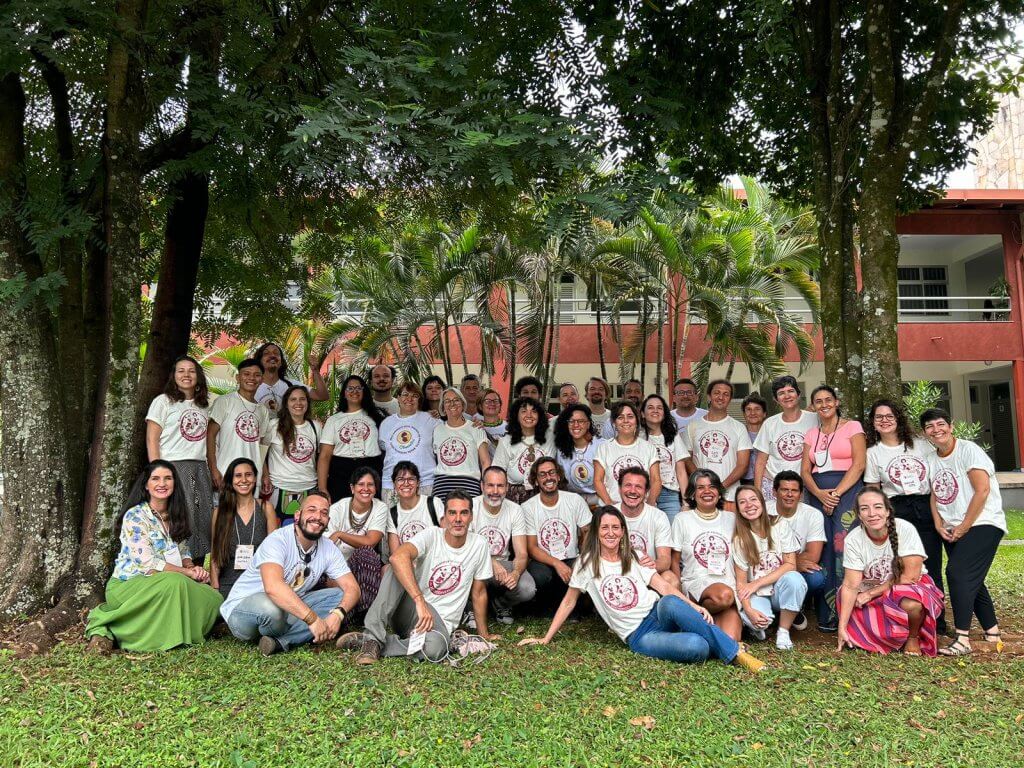
With the aim of strengthening participant engagement and recognizing the contribution of each entity, the Observatory of Socio-biodiversity Economies (ÓSocioBio) held its 2nd in-person meeting on March 19th and 20th in Brasília. The event aimed to plan the network's main areas of activity for 2024 – which already includes 39 organizations.
To begin, the meeting included a presentation reviewing the actions and history of ÓSocioBio, with talks about the activities in 2023, highlighting the main impacts on public policies, results, and lessons learned – such as dialogues for the construction of the National Sociobioeconomy Plan and for the regulation of the National Policy on Payment for Environmental Services, for example.
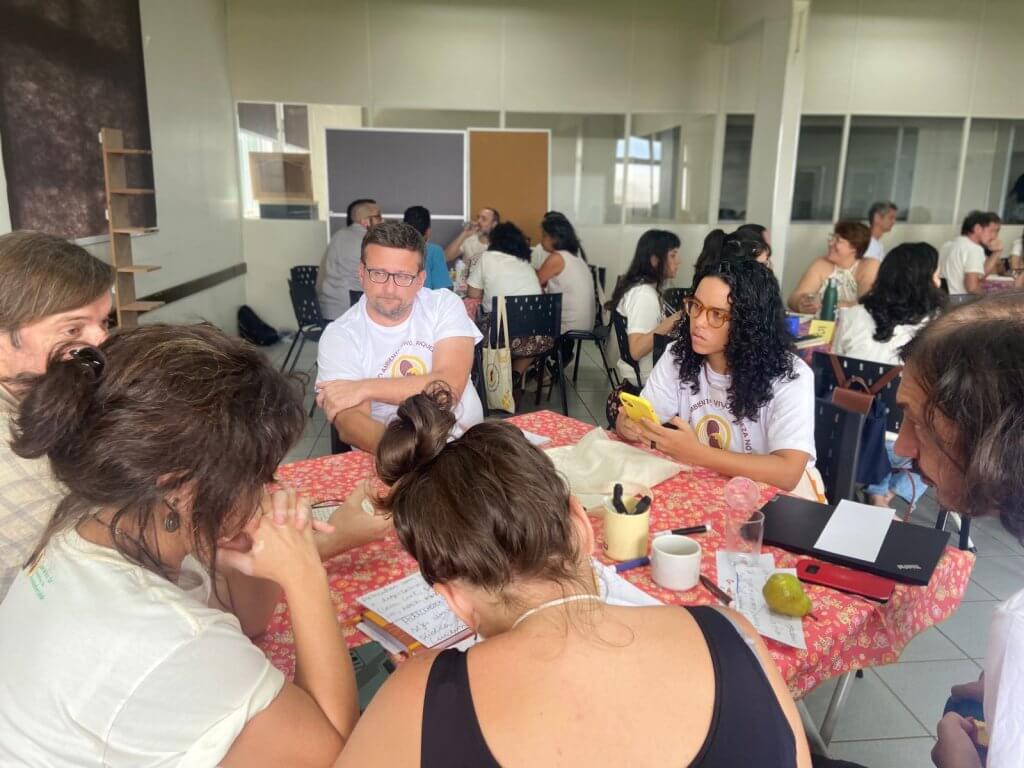
The organizations WTT Ventures and WRI Brasil, which joined the observatory this year, were introduced to the group. Following this, using a participatory approach developed with specialized consulting in socio-environmental project planning, work plans were created for the network to strategically engage with the Federal Government and the National Congress.
A brief analysis of the public policy landscape related to socio-biodiversity economies was also presented, with representatives from the Federal Government: Silvio Porto, from the National Supply Company (Conab), a public company based in Brasília, linked to the Ministry of Agrarian Development and Family Agriculture; Márcia Muchagata, from the Ministry of Development and Social Assistance, Family and Fight against Hunger; and Bruna de Vita, from the Ministry of Environment and Climate Change.
“Our in-person meeting represented a unique opportunity to enhance the political advocacy and communication actions already carried out by each organization, but now with the strength that the network can generate in both the executive and legislative branches. It is expected that the discussions, collaborations, and the action plan developed will result in concrete and effective initiatives to address the environmental and social challenges we currently face,” highlights Executive Secretary Laura Souza.
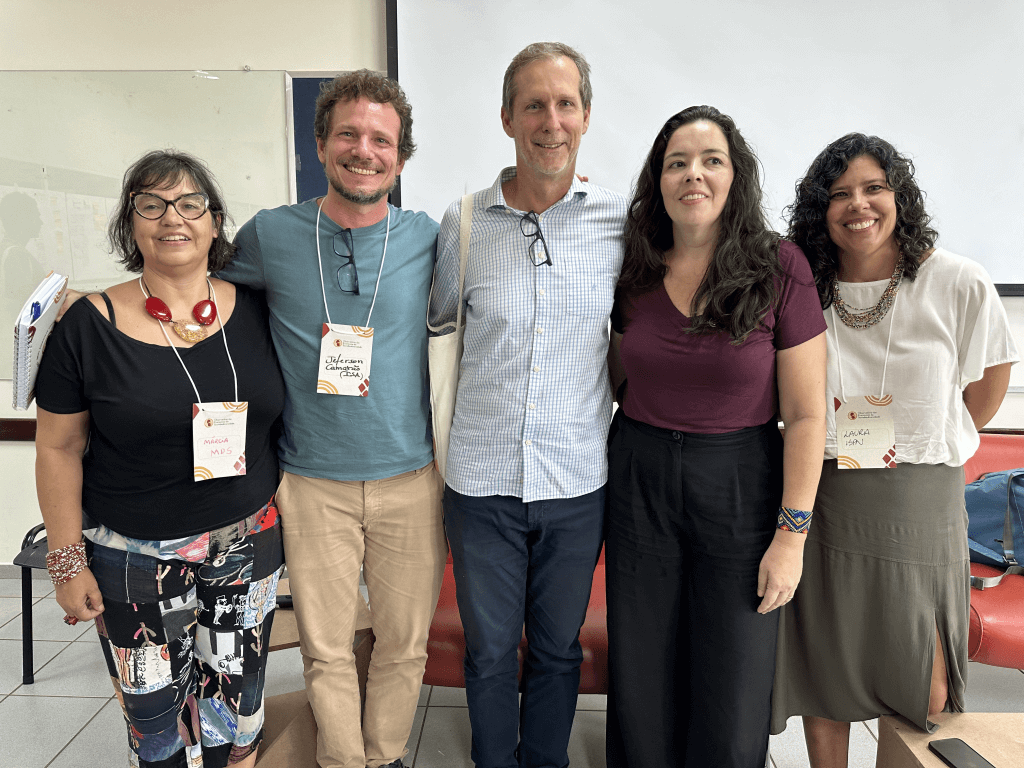
“Our in-person meeting represented a unique opportunity to enhance the political advocacy and communication actions already carried out by each organization, but now with the strength that the network can generate within both the Executive and Legislative branches. It is expected that the discussions, collaborations, and the action plan developed will result in concrete and effective initiatives to address the environmental and social challenges we currently face,” highlights Executive Secretary Laura Souza.
Angélica Mendes, from the Chico Mendes Committee in Acre, who participated for the first time in discussions with the ÓSocioBio network, highlighted that: “it has been a very interesting opportunity, it's been a learning experience. The Committee is an organization that, although it is 35 years old, has been institutionalized for three years. And now that we are starting work with socio-biodiversity economies, we want to know how the group operates at the national and local levels, and what we can do together with the organizations we work with.”
Climate policy analyst Ciro Brito, from the Socio-environmental Institute – which is part of the executive coordination of ÓSocioBio – also spoke about the importance of the connection between members. “This meeting is fundamental for us to reconnect and coordinate our joint action in defense of socio-biodiversity economies, which contribute to the protection of territories and to keeping the forest alive. We want to think about our impact in a coordinated way in 2024,” he assessed.
Public policies
In its policy advocacy priority matrix, the network highlighted the continuation of dialogues with the Federal Government for the development of the National Socio-bioeconomy Plan and the regulation of the National Policy for Payment for Environmental Services (PNPSA), both under the responsibility of the Ministry of Environment and Climate Change (MMA). It also emphasized adjustments to the access of traditional peoples and communities to public procurement, such as the Food Acquisition Program (PAA), the National School Feeding Program (PNAE), and the Minimum Price Guarantee Policy for Socio-biodiversity Products (PGPM-Bio).
In addition to these, ÓSocioBio will also work with other policies such as: implementation of the Tax Reform; National Strategy and Action Plan for Biodiversity (EPANB); National Policy on Science, Technology and Innovation; advocacy at IBGE; and the Bioeconomy Initiative of the G20 Sherpas Trail.
Within the scope of the National Congress, ÓSocioBio will continue monitoring the following Bills: Bill 1855/2022 – National Policy on the Biodiversity Economy; Bill 150/2022 – National Bioeconomy Policy; Bill 1970/2019 – National Policy for the Management of Pequi; Bill 880/2020 – National Policy for the Promotion of Food and Products of Socio-biodiversity of Traditional Peoples and Communities; and Bill 1864/2022, which amends Law No. 14.119, of January 13, 2021, which establishes the National Policy for Payment for Environmental Services.
About ÓSocioBio
The Observatory of Sociobiodiversity Economies (ÓSocioBio) is a network that emerged amidst the political-electoral context, in June 2022, to demarcate a space in defense of the economies of peoples and their territories, and to become a necessary interlocutor in the construction and strengthening of public policies oriented towards sociobiodiversity, aggregating experiences, knowledge, skills and capacities of our members, partners and collaborators.
Who is part of it?
- ACT Health Promotion
- Articulation of Indigenous Peoples of Brazil (APIB)
- Pacari Network of Cerrado Roots
- Central Cerrado Cooperative
- Center for Agroecology and Education of the Atlantic Forest (OCA)
- Tapajós Youth Collective
- Pirarucu Collective
- Chico Mendes Committee
- National Confederation of Rural Workers, Farmers and Family Farmers (CONTAG)
- National Coordination of Quilombo Articulation (CONAQ)
- National Council of Extractive Populations (CNS)
- Ecology and Action (ECOA)
- Engajamundo
- Pro-Nature Foundation (Funatura)
- Greenpeace Brazil
- Brazilian Institute for Development and Sustainability (IABS)
- Instituto Centro de Vida (ICV)
- Sustainable Connections Institute (Conexsus)
- Institute for Conservation and Sustainable Development of the Amazon (Idesam)
- Institute of Socioeconomic Studies (INESC)
- Institute of Forest and Agricultural Management and Certification (IMAFLORA)
- Amazon Environmental Research Institute (IPAM)
- Institute for Ecological Research (IPÊ)
- International Institute of Education of Brazil (IEB)
- IEPÉ Institute
- Juruá Institute
- Waterline Institute
- Institute of Society, Population and Nature (ISPN)
- Socioenvironmental Institute (ISA)
- Chico Mendes Memorial (MCM)
- Management Center for the Production Chain of Pequi and other fruits of the Cerrado
- Brazil Nut Observatory (OCA)
- Organization for the Human Right to Adequate Food and Nutrition (FIAN Brazil)
- Cerrado Network
- Network of Traditional Peoples and Communities of Brazil (Rede PCT)
- Slow Food Brazil
- WWF – Brazil
- WRI-Brazil
- WTT
Text: Dominik Giusti/advocacy and communication advisor at ÓSocioBio