

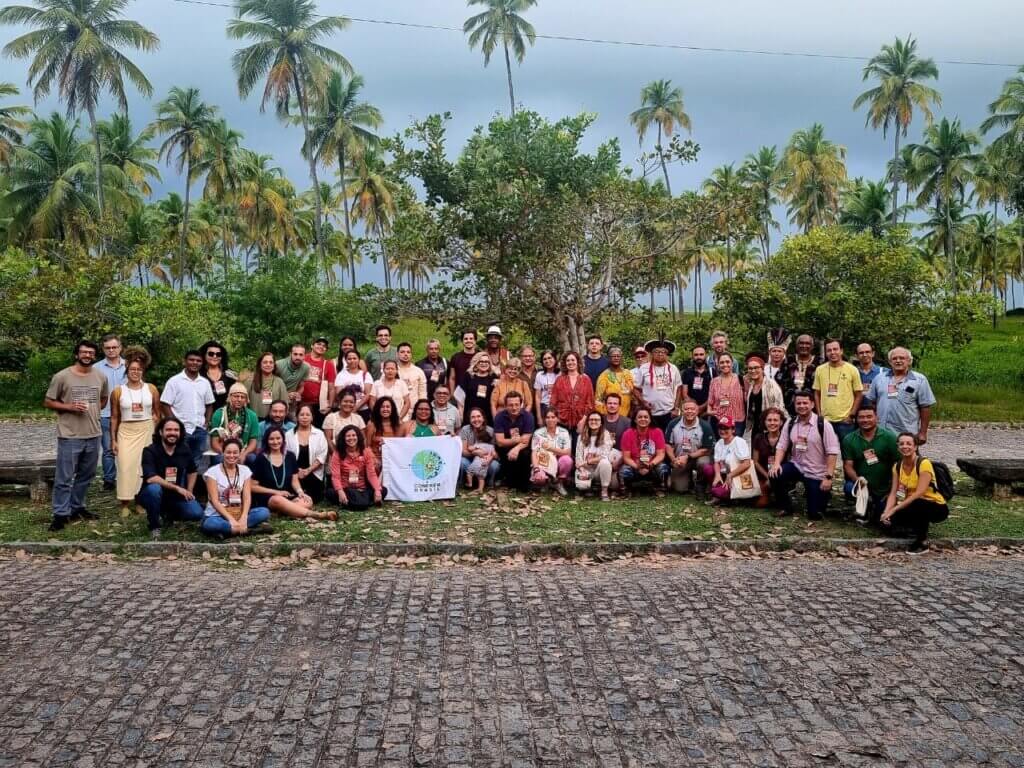
The objective was to contribute to the development of the public policy that is an instrument of the National Bioeconomy Strategy – launched by the Federal Government on June 5th, through Decree 12.044.
In August, the Observatory of Sociobiodiversity Economies (ÓSocioBio) actively participated in the event " Dialogues of the National Sociobioeconomy Plan ," held by the Ministry of Environment and Climate Change (MMA), the Ministry of Agrarian Development and Family Agriculture (MDA), and the Ministry of Development and Social Assistance, Family and Fight against Hunger (MDS). The objective was to contribute to the elaboration of the public policy that is an instrument of the National Bioeconomy Strategy – launched by the Federal Government on June 5th, by Decree 12.044.
The “Dialogues” are being conducted through regional workshops that seek to bring together representatives of traditional peoples and communities from different biomes and territories of Brazil, as well as representatives of civil society and the Federal Government itself, for analysis and suggestions regarding the policy proposals. The idea is to collaboratively build a Plan that should “promote the Sociobioeconomy in Brazil as a strategy for inclusive economic, social and environmental development, based on the sustainable use of native biodiversity and the valorization of the territories of Indigenous Peoples, Quilombola Communities, Traditional Peoples and Communities, and Family Farmers, recognizing their knowledge and cultural values,” according to a document presented during the workshops.
The direct beneficiaries of the Plan are associations and cooperatives whose production and management base is composed of traditional peoples and communities; companies with production chains integrated into the socio-bioeconomy production base; as well as communities and families. During the event, the priority production systems were presented: plant extraction; artisanal fishing; agroecological systems; agrosilvopastoral and agroforestry systems; Traditional Agricultural Systems (TASs); agrobiodiversity; community-based family forest management for multiple uses; meliponiculture; as well as community-based tourism, food, handicrafts, phytotherapeutic and cosmetic products, forest and productive restoration, and cultural actions.
The document – which will be part of a larger policy, the National Bioeconomy Plan – contains important themes for socio-productive inclusion, divided into seven areas:
- Institutional, regulatory and fiscal environment
- Socioeconomic and environmental sustainability of community-based economic ventures.
- Value chains, companies and ethical markets for socio-biodiversity
- Research, innovation and technological development
- Public system of information and knowledge
- Public and private funding
- Payment for environmental services
Offices
Five regional workshops were held (Northeast, Midwest, South and Southeast, North I and North II). The first, from July 31st to August 1st, in Tamandaré (PE), brought together people from the Caatinga, Cerrado, Coastal and Atlantic Forest biomes and included the participation of the executive secretary of ÓSocioBio, Laura Souza, and the senior socio-biodiversity analyst from the Socio-environmental Institute (ISA), Jeferson “Camarão” Straatmann, as well as representatives from Engajamundo and the National Coordination of Quilombo Articulation (CONAQ). According to the executive secretary, the Federal Government sought to actively listen to those present.
The Observatory of Sociobiodiversity Economies network recognizes the relevance of the National Sociobioeconomy Plan in light of the structural changes in Brazil's socio-environmental policies. However, it is essential to address the challenges presented by the plan. “It is crucial that the plan ensures consultation and active involvement of traditional peoples and communities, avoiding the reproduction of centralized models that are misaligned with local realities. Furthermore, the lack of defined funding sources compromises the implementation of concrete actions that could truly strengthen sociobiodiversity product chains,” emphasized Laura Souza.
Another issue raised was the definition of roles between the State, the private sector, and civil society, which also needs to be better delineated to avoid overlaps and ensure that policies reach the grassroots level, where they are truly needed. "The plan, as it is being constructed, risks being more of a policy of intent than a transformative tool that brings real benefits to those who depend on natural resources," added the executive secretary.
At the Central-West workshop, held in Brasília (DF) on August 8th and 9th, focusing on the Cerrado and Pantanal biomes, representatives from ÓSocioBio members such as WWF-Brazil, Instituto Conexões Sustentáveis (Conexsus), Articulação Pacari – Raizeiras do Cerrado, CONAQ, Núcleo do Pequi, Central do Cerrado, and social movements such as artisanal fishermen and women fisherwomen, and babaçu nut breakers, participated. Mayk Arruda, institutional advisor for Central do Cerrado, stated that the construction of the Plan through dialogue and with representation from traditional peoples and communities of all biomes is a step forward, but he added that it is necessary to analyze historical problems of access to and adequacy of public policies.
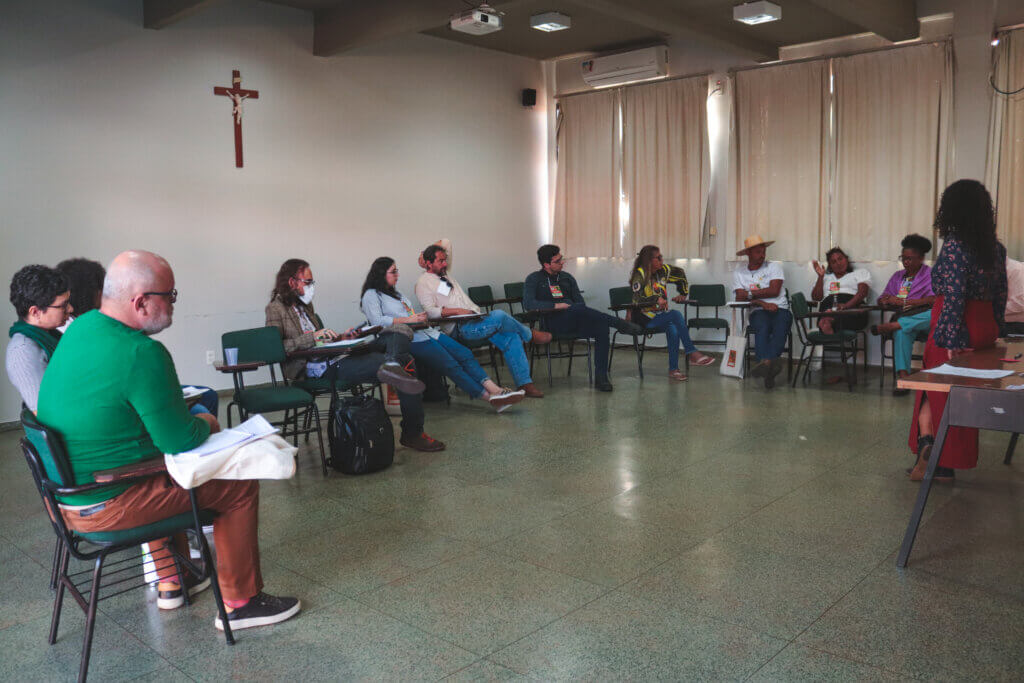
“It is crucial to ensure that we do not create yet another instrument that ends up burdening communities instead of contributing to their development. Instead of strengthening the participation of these communities, it could end up hindering their effective and active involvement. Ultimately, what is being discussed is the governance of the supply chains, which are extremely diverse and complex,” argued Mayk Arruda.
In Iperó (SP), the South and Southeast workshop took place on August 15th and 16th, to hear from peoples of the Atlantic Forest, Pampa, and Coastal regions. According to Henrique Kefalás, executive coordinator of the Linha D'Água Institute – a member of ÓSocioBio – in terms of content, what is being proposed by the Federal Government has significant gaps. “There is a disconnect between pre-existing public policies and the areas the plan intends to address. Furthermore, the idea of socio-biodiversity hubs seems to repeat the logic of local productive arrangements, repackaging old concepts without concretely addressing the bottlenecks that have existed since the launch of the initial policies. The feeling is that we are making little progress, without innovations or substantial changes that respond to current needs,” he analyzed.
The Northern Region I Workshop was held in Manaus (AM). The meeting took place between August 22nd and 23rd and was attended by approximately 100 participants, including representatives from civil society organizations, indigenous people, riverside communities, local governments, and other partners who contributed to the development of what will become the National Sociobioeconomy Plan.
“Securing the territory” is how Francisco Flavio Ferreira do Carmo, vice-president of the Association of Rural Producers of Carauari, summarizes the importance of socio-bioeconomy in the Amazon. It couldn't be otherwise, since it is through the commercialization of managed pirarucu fish, native rubber, family farming, flour, and açaí that 870 members of this cooperative can generate income, respecting their way of life and preserving a part of the living Amazon.
The Northern Region Workshop II is being held in Belém, from September 3rd to 6th, to listen to and gather contributions from the peoples of the Amazon and Coastal-Marine biomes. Later this year, the final stage of the Plan's development is planned, with a National Workshop to be held in Brasília (DF), where the policy is expected to be consulted. In each regional stage, four representatives of Traditional Peoples and Communities were chosen to contribute to the public policy that could be the main policy for strengthening socio-biodiversity economies in Brazil.
Steps for building the Plan
The Manaus session was the penultimate of five regional workshops that discussed proposals to be included in a plan with the participation of experts and representatives of civil society working in Brazilian biomes, from north to south of the country. During the program in all workshops, participants accessed the history of the construction of the legal frameworks of the socio-bioeconomy.
The creation of a National Sociobioeconomy Plan is not starting from scratch. Since 2009, Brazil has had a National Plan for the Promotion of Sociobiodiversity Product Chains , which already pointed to necessary paths for the sociobiodiversity agenda.
For Andressa Neves, Conservation Analyst at WWF-Brazil, the race is on to ensure implementation happens during this administration and that the Plan has real applicability in the territories. “The Plan will indicate how to strengthen socio-biodiversity economies throughout the country. We need this guideline because, being a legal instrument, it brings responsibility to the State while simultaneously outlining for society what will be prioritized,” she emphasized.
Territorialized strategy

The National Plan for Sociobioeconomy points to a territorialized implementation strategy, from the perspective of sociobioeconomy business ecosystems. The definition of these territories should take into account various layers of information – the presence of traditional territories and community enterprises (formal or informal), logistics, history of social relations, incidence of territorial divisions of other policies, with the aim of favoring and boosting sociobiodiversity economies.
Lila Lindoso, coordinator of Bioeconomy Promotion at the National Secretariat of Bioeconomy (MMA), explained that the proposals for the so-called Sociobioeconomy Territories and Hubs would be models of territorial management and would serve as a pillar of support for the promotion of the sociobioeconomy in the territories.
“The socio-bioeconomy hubs would then play the role of activating these ecosystems, promoting management mentoring for community enterprises, training and capacity building, exchange between enterprises, public policy managers, the private sector, innovation ecosystems, financial agents, promoting access to public policies, private markets, the financial system, in short, playing a 'stitching' role between the various actors necessary for the development of the socio-bioeconomy,” explained Lindoso.
The Sociobioeconomy Hubs are being conceived during the collaborative construction process of the National Plan and point to the arrangements for implementation, management and social control, the role of the State, the role of enterprises and communities, the main services to be offered by the hubs and the integration with other initiatives already existing in the territories.
Through the strategy of the poles, the Sociobioeconomy Plan also aims to strengthen some existing policies in the territories, such as the Food Acquisition Program (PAA), the National School Feeding Program (PNAE), the Minimum Price Guarantee Policy for Sociobiodiversity Products (PGPM-Bio), the National Program for Strengthening Family Farming (PRONAF), as well as the Payment for Environmental Services Policy and the Biodiversity Law, which regulates access to genetic resources and associated traditional knowledge.
According to Romilson Barbosa Mota, from the Jauaperi extractive reserve in the lower Rio Branco region and regional director (Roraima) of the National Council of Extractive Populations (CNS), "extractivists need to be included in a productive chain and have fair prices for their products; this is urgent for the Amazon and for Brazil if we want to continue talking about standing forests," he argued.
Text by: Dominik Giusti (ISPN/ÓSocioBio Communications) and Tainá Aragão (WWF-Brazil Communications)