

For many years, the countryside was relegated to a dichotomy with the urban environment and to public policies. Beyond agricultural and pastoral production, it has never been so evident to feel and perceive the rural environment as a space where life pulsates, a territory of possibilities, diversity, and multiple cultures. The construction of this perspective is the result of popular education, interaction with academia, and, above all, the work of social organizations. It is in this movement that Agroecology is consolidated – more than a science, it is a way of living and being in the world, with sustainability, social equity, and respect for nature, gender relations, and diversity. It emerges as a form of resistance and a political stance towards the world.
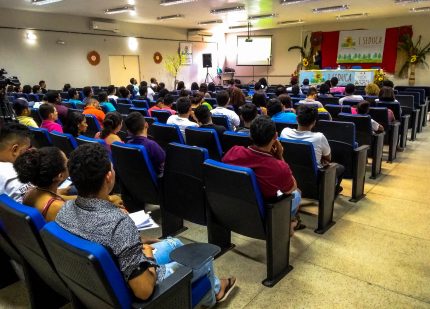
In this context, the first “Symposium on Rural Education and Agroecology: Dialogues and Convergences” (Seduca) was held between November 8th and 10th at the Federal University of Maranhão (UFMA), in the city of Bacabal. The event brought together approximately 150 people, including teachers, representatives of social movements, university students, high school students, and students from agricultural family schools in various municipalities in the region. The initiative also included the presence of technical advisors from ISPN, which was one of the supporters and sponsors of the activity.
The symposium's objective was to promote training and the exchange of experiences among participants, as well as to foster knowledge exchange between rural schools, encourage discussion on agroecology and rural education, and the relationships between these areas of knowledge, as well as the relevance of this collaboration for promoting sustainable rural development. In addition to lectures on the event's central theme, the program also included debates on food sovereignty and security and the impacts of agricultural activities on socio-environmental issues. Several roundtables also took place on rural education; the use of fire on arable land; and the management of pesticides, genetically modified organisms, and sustainability.
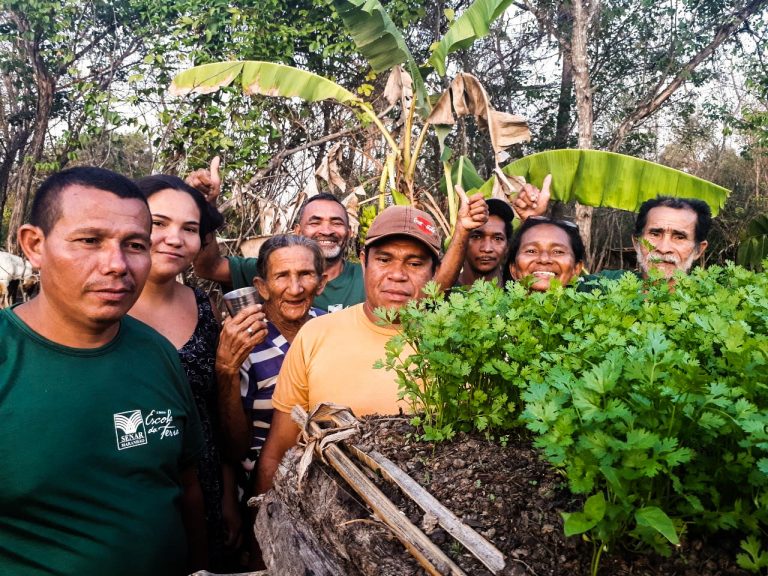
For Rodrigo Souza, a 20-year-old student in the Rural Education degree program at UFMA (Federal University of Maranhão), from the rural community of Centro da Josina, in the municipality of São Luís Gonzaga (MA), agroecology has changed the lives of his family and neighbors. The community, where the young man lives with his relatives, is supported by the Community Association for Health and Agricultural Education (Acesa), which is a partner of ISPN. “We used to work with pesticides; it might have been an easier way, but it was more harmful to the environment. It's very rewarding for us because we know we are working with healthy products to support people and help nature. Without nature, we are nothing. So, we have to work in partnership with nature,” he said proudly.
“I strongly believe in Agroecology, because it is the way to save our biodiversity in our environment, in our community. And to preserve everything in our community in a way that can increasingly enrich our region. Agroecology allows us to work sustainably with the environment and the biodiversity around us,” emphasized the young Rodrigo Souza.
According to Emerson Dalla Chieza, a professor of Agroecology at UFMA (Federal University of Maranhão), this dialogue between academia and the field is important. “History shows us how productive this interaction and rapprochement is. Today, we are fostering this path that is already underway and that we need to strengthen even further. Academia, with all its structure, can contribute to this process. If we remain only within the walls of the university, thinking about what these people actually need, we run the risk of producing something that is not so useful. As we get closer, we can refine these conversations and produce something more useful,” he explained.
"Rural education and agroecology are the fruits of resistance movements; the result of much struggle, debate, and construction," the professor emphasized.
Towards an Agroecological Policy – Bill No. 185/18, which will establish the State Policy for Agroecology and Organic Production of Maranhão (Peapoma), is currently being processed in the Legislative Assembly of Maranhão (Alema). This action will mark the state's commitment to implementing mechanisms that will allow for sustainable rural development, as well as promoting the well-being of rural farming families themselves. The proposal is being driven by the growing demand for healthy food. Peapoma is a civil society initiative represented by the Agroecology Network of Maranhão (Rama) – in addition to ISPN, other partner organizations are part of this network.