

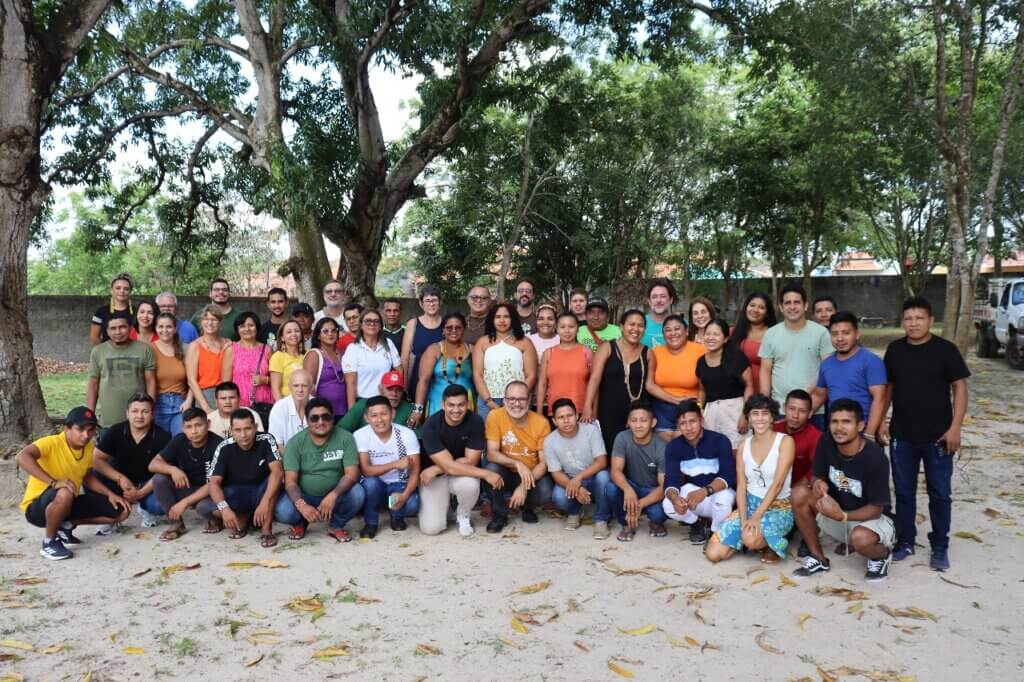
The entire ISPN collegiate coordination, the executive coordination, and the superintendent board of the Institute were in Santa Inês, Maranhão, on June 3rd, 4th, and 5th, 2025, to celebrate the realization of a huge achievement for the Guajajara people, who live in the Indigenous Lands (TI) Rio Pindaré and Caru, and the Ka'apor people, from the TI Alto Turiaçu, territories that shelter a large part of what remains of the Amazon Rainforest in Maranhão.
The Mainumy Indigenous Association, representing the Guajajara people of the Pindaré River; the Wirazu Community Indigenous Association, representing the Guajajara people of Caru; and the Ta Hury Association, representing the Ka'apor people of Alto Turiaçu, will now manage 100% of the resources from the Cooperation and Commitment Agreement (TCC) signed between the indigenous associations, the National Foundation for Indigenous Peoples (Funai), and the company Vale SA.
The autonomy achieved after nine years of work is a milestone for the management of indigenous organizations and for the strategy implemented by ISPN with this objective. The achievement was formalized during the XXIII Ordinary Meeting of the TCC Fiscal Council, which was attended by, in addition to the ISPN delegation, indigenous representatives Ka'apor, Guajajara and Awa Guajá from the Caru, Rio Pindaré, Awá and Alto Turiaçu Indigenous Territories, representatives from Funai and Vale.
ISPN is the civil society organization responsible for implementing the TCC and has led the planned actions with the communities to strengthen indigenous associations for over a decade.
“Throughout these years, ISPN’s work has focused not only on meeting the demands of indigenous peoples, but mainly on supporting them so that they could take the lead in the process in a qualified and well-founded manner, based on a broader discussion. This moment of protagonism of indigenous associations, as well as young people and women, is celebrated by ISPN as the result of a process that was underpinned by different initiatives aimed at strengthening indigenous organizations and the capacities of the leaders who make up these organizations and who represent the Guajajara and Ka'apor people ,” stated Ruthiane Pereira, coordinator of ISPN’s Maranhão Program.
The TCC's financial resources are used by the associations and the implementing organization, ISPN, to carry out strategic actions for territorial protection, preservation and conservation of natural resources, economic sustainability and income generation; and also for cultural strengthening, institutional strengthening, health, education, citizenship, basic sanitation and infrastructure.
Environmental impacts
ISPN arrived in Maranhão in 2013 to manage the resources of the TCC (Term of Commitment to Indigenous Affairs) that were previously managed by Funai itself. From 2017 onwards, the agreement was reformulated, and it was established between the signatories that the management of resources would be carried out year by year, proportionally and progressively, between the indigenous associations and ISPN, in such a way that, in the first year, ISPN would fully manage the resources, but from the ninth year of execution onwards, the indigenous associations should achieve full management of the financial resources. This is what is happening now.
“ Following the negotiation of a new cooperation agreement between Vale and Funai, the resources that were initially managed by ISPN, executing a work plan discussed with the communities, began to be shared with indigenous organizations that also underwent a training process in project management. Each year, a larger percentage of the project was transferred to the management of the organizations, and today we have this milestone of 100% of the resources from this cooperation agreement being managed by the Guajajara and Ka'apor organizations ,” explained the executive coordinator of ISPN, Fábio Vaz.
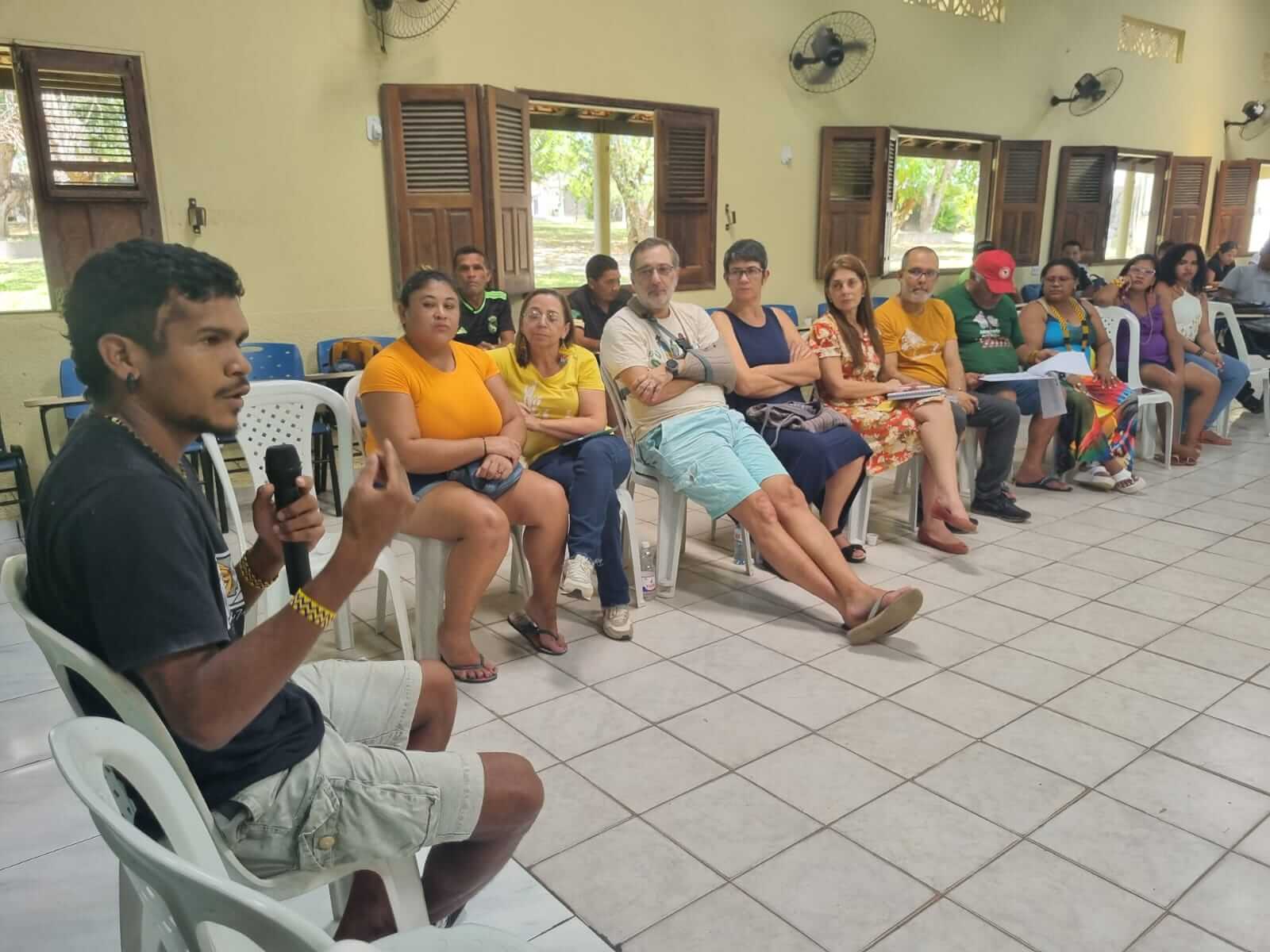
Indigenous organizations recognize the positive effects of this strategy.
“ Everyone has to be involved in this process of empowering the territory, the community, and our organizations. We have regional and state organizations that need everyone's presence, working on sustainable activities within the territory and empowering the communities themselves, because that's what we want ,” stated Fabrício Guajajara, a young leader and president of the Mainumy Association of the Rio Pindaré Indigenous Land.
Fabrício highlighted ISPN's role in enabling the Mainumy Association to progressively assume management of the TCC's resources.
“Throughout this process, we saw things that didn't work out. And we can correct them because we have a clear vision of what we want. And within all of this, we want ISPN as our partner. I say this on behalf of the Mainumy Association; we want ISPN close by, guiding us, helping to build and strengthen our territory . ”
Another leader, Cícera Guajajara, from the Maçaranduba Village in the Caru Indigenous Territory, expressed her gratitude to the Institute's team.
“I want to express my gratitude because we from Maçaranduba have learned a great deal from the ISPN team. So, I just want to thank you from the bottom of my heart because your work has strengthened our organizations and our work in the village. We have always gotten along very well with the ISPN team. We want your work to continue in the Caru Indigenous Territory and also, I know, in the Pindaré Indigenous Territory. So, my thanks to ISPN ,” he said.
Awa Guajá
The Awa Guajá, specifically from the Caru, Awá, and Alto Turiaçu Indigenous Lands, are signatories to the TCC (Term of Commitment). ISPN will continue to administer 100% of the TCC resources allocated to them, applying them to actions planned with the communities, as stipulated in the Agreement.
The decision was made jointly with the Awa Guajá, considering that the formation of their associations occurred recently, during the process of drafting and implementing the TCC (Final Course Project). The Awa Guajá inhabit the Alto Turiaçu, Caru, and Awá Indigenous Lands, in addition to groups in voluntary isolation in Araribóia, all in Maranhão.
“In our relationship with the Awá people, ISPN remains available to implement and support the process of strengthening indigenous associations so that they continue on the path of institutional strengthening, respecting their culture and the Awá way of life,” stated Ruthiane Pereira.
Review
The 23rd Ordinary Meeting of the TCC Fiscal Council was attended by the entire ISPN collegiate coordination team, the executive coordinator, Fábio Vaz, and the Institute's superintendent director, Cristiane Azevedo. They all participated in a morning with the indigenous leaders who are part of the Fiscal Council, for an evaluation of the Institute's performance, and the coordinators contextualized the ISPN governance model and the objectives of each of the Institute's programs for the leaders.
“Participating in the TCC Fiscal Council meeting was quite significant, with the presence of indigenous leaders, partners, and all ISPN coordinators. This meeting marked the celebration of a process built over more than ten years, in which the Guajajara, Mainumy, and Wirazu indigenous associations; and the Ka'apor, Ta Hury association, began managing 100% of the TCC resources. This result highlights the importance of investing in the institutional strengthening of organizations and valuing indigenous leadership in building lasting solutions for their territories. We left this meeting reaffirming our partnership with all these organizations and with the strengthening of their livelihoods in the territory,” stated Cristiane Azevedo.
“ From the beginning of ISPN's work in the Santa Inês office, our perspective has been to enable increasing autonomy for the indigenous peoples with whom we interact, as well as all the work we do with the communities. The results achieved in these 12 years are exemplary ,” added Fábio Vaz.
The ISPN office in Maranhão is located in the city of Santa Inês, 250 kilometers from the capital São Luís, close to the territories and indigenous peoples served by the Cooperation and Commitment Agreement between the Associations and Indigenous Communities of the Caru, Rio Pindaré, Awá and Alto Turiaçu Indigenous Lands, FUNAI and Vale.
Cássio Bezerra / ISPN Communications Office