

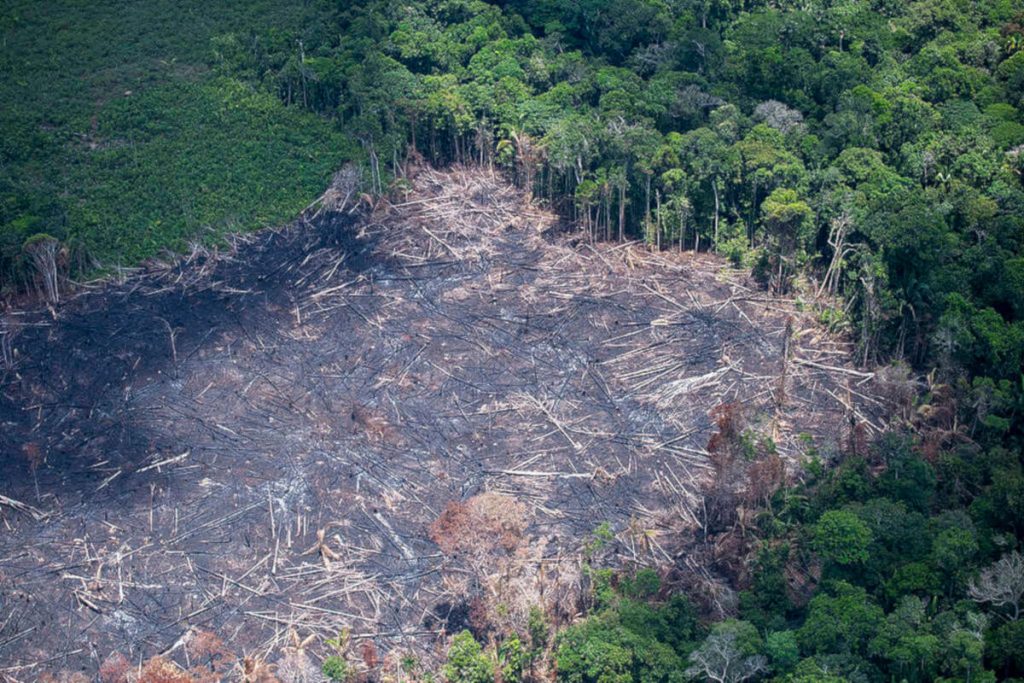
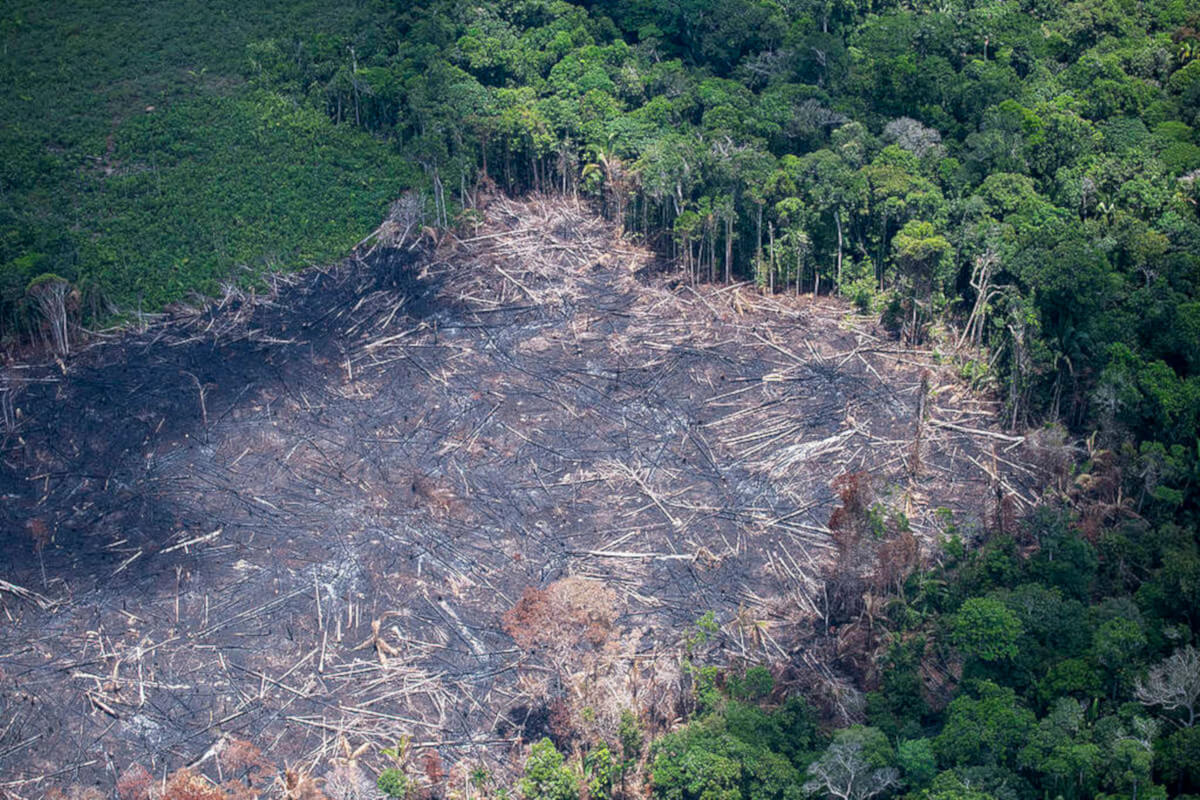
An open letter to BNDES, released today, demands concrete measures to prevent financing of deforestation and a review of the Bank's socio-environmental policy.
Fifty civil society organizations, including ISPN, today released an Open Letter to BNDES demanding that the institution release more than R$ 2 billion under the management of the State Bank, currently held in the Amazon Fund, Climate Fund, and Social Fund.
They are also requesting new measures to block funding for areas with illegal deforestation and greater rigor in lending to projects that cause social and environmental impact. The request comes amid the pandemic, when a bank created for social development is gaining a fundamental role in economic recovery.
The letter will be presented during a joint event of the Environmental Parliamentary Front, the Mixed Parliamentary Front in Defense of the Rights of Indigenous Peoples, and the SDG Parliamentary Front, which takes place today (04/08) at 15 pm.
The event will feature the presence of Mr. Luciano Coutinho, president of BNDES from May 2007 to May 2016, and Mr. Arthur Koblitz, president of the BNDES Employees Association.
According to organizations, in recent decades, BNDES had been adopting an investment pattern that reinforced social inequalities, violated the rights of communities, and exploited ecosystems in an unsustainable way, as seen in the loans granted for the construction of hydroelectric power plants in the Amazon.
“Faced with the pandemic, the country is witnessing the federal government's inability to confront the health crisis, states and municipalities deepening their indebtedness, and public policies weakened by a lack of resources. (…) And this scarcity demands a State Bank at the service of the gigantic challenge of changing the paradigm of development itself, overcoming outdated models of economic growth that ignore social and environmental impacts, especially affecting the most vulnerable groups,” says the Open Letter.
The document adds that, at this moment, there is a great opportunity to do things differently. "Millions of people are being thrown into poverty and extreme poverty; with the Black population being disproportionately affected; hundreds of businesses whose sole source of income is for families are ceasing to exist, and along with them thousands of jobs and occupations."
The letter is signed by more than fifty organizations, including the Institute for Socioeconomic Studies, Conectas Human Rights, International Rivers, the Institute for Society, Population and Nature, the Institute for Consumer Protection, the Climate Observatory, and the Socio-environmental Institute.
The document concludes that, at this moment, it is fundamental that BNDES (Brazilian Development Bank) promote social development in practice. "There is a rich local and community-based economy, with strong identity and creative content – feminist, indigenous, Black, young, from the periphery – that needs to be stimulated and strengthened," the text emphasizes.
The urgent actions demanded in the Open Letter:
- Massive and immediate use of resources from the Social Fund.
- Resumption of operations of the Amazon Fund, reactivation of the previous structure of the Amazon Fund Steering Committee (COFA), and suspension of new rules that hinder registration.
- Implementation of Climate Fund resources and greater transparency, ending operational bottlenecks.
- New criteria for direct and indirect agricultural credit operations, including the use of the Rural Environmental Registry (CAR) to detect irregular areas, the requirement to adhere to the Environmental Regularization Program (PRA), greater control by companies over their production chains, and others.
- Public hearing to discuss the reconstruction of the post-COVID-19 economy from the perspective of environmental sustainability, social justice, and combating racism.
The demands for improving transparency policies and
Socio-environmental safeguards:
- Requirement for Free, Prior and Informed Consultations, in accordance with ILO Convention 169, including any consultation protocols with indigenous peoples, quilombola communities and traditional communities.
- Community participation in the project design and supervision process.
- Active and passive transparency of essential information about operations and projects under review, with the creation of an external and impartial committee of experts to guide the institution's actions.
- A new system to resolve potential disputes, considering the current inefficiency of the Ombudsman figure.
- Review of the Socio-environmental Policy for the Mining Sector.
- Revision of the Socio-environmental Guide for Beef Cattle Farming, with new guidelines for working conditions in light of the impacts of Covid-19, in and from slaughterhouses.
- Opening a dialogue with civil society organizations regarding the design of the Implementation Plan for the updated version of the PRSA, approved by the Board of Directors in November 2019, considering that the current Implementation Plan covers the period 2018-2020.
Check out the full letter here.
| The letter is open to the public and addressed to:
Paulo Roberto Nunes Guedes – Minister of Economy; Rodrigo Felinto Ibarra Epitácio Maia – President of the Chamber of Deputies; David Samuel Alcolumbre Tobelem – President of the Federal Senate; Luís Roberto Barroso – Justice of the Supreme Federal Court; Rosa Weber – Justice of the Supreme Federal Court; Gustavo Montezano – President of BNDES; Ricardo Barros – Director of Operations; Bianca Nasser – Director of Finance; Bruno Laskowsky – Director of Equity Investments, Capital Markets and Indirect Credit; Petrônio Cançado – Director of Credit and Guarantees; Pedro Moes Iootty de Paiva – Superintendent of Strategic Planning; Júlio Costa Leite – Superintendent of Public Management and Socio-environmental Affairs; Nabil Moura Kadri – Head of the Socio-environmental Department. |
| The following organizations have signed the Charter:
350.org Brazil; Accountability Counsel; Friends of the Earth – Brazilian Amazon; National Network for the Fight Against AIDS; Network of Indigenous Peoples of Brazil; Coastal Ecosystems; Article 19; Asibama-DF; Inter-American Association for the Defense of the Environment; Bank Information Center; Buliisa Initiative for Rural Development Organisation; Center for International Environmental Law; Center for Research and Extension in Socio-environmental Law; Center for Indigenous Work; No-Fracking Brazil Coalition for Climate, Water and Life; Conectas Human Rights; Environmental Law and Natural Resources; Ecology and Action; Federation of Quilombola Communities of the State of Minas Gerais N'golo; Forum of AIDS NGOs of the State of São Paulo; Forum on Climate Change and Socio-environmental Justice; AIDS NGO Forum RS; Friends with Environment in Development Uganda; Avina Foundation; Esquel Group Foundation Brazil; Gender Action; Gestos – HIV/AIDS, Communication and Gender; Civil Society Working Group for the 2030 Agenda; Brazilian Institute for Social and Economic Analysis; Brazilian Institute for Consumer Protection; Institute for Development and Human Rights; Institute for Energy and Environment; Institute for Socioeconomic Studies; Institute for Environmental Research and Education; Institute for Democracy and Sustainability; International Institute of Education of Brazil; Arayara International Institute; Socio-environmental Institute; Institute for Society, Population and Nature; International Accountability Project; International Rivers – Brazil; China-Latin America Sustainable Investments; Jamaa Resource Initiatives; Movement for Popular Sovereignty in Mining; Movements of People Affected by Dams; Observatory of Community Protocols for Free, Prior and Informed Consultation and Consent; OCM Observatory of Mineral Coal; Climate Observatory; Oil and Gas Observatory; Network of Women Producers of the Cerrado and Pantanal; Network of Non-Governmental Organizations of the Atlantic Forest; Pantanal Network. |